Nepal court backs “red book” mountain guides
Supreme Court rejects challenge from internationally certified climbers, exposing deeper tensions over standards and prestige in Nepal’s mountaineering industry
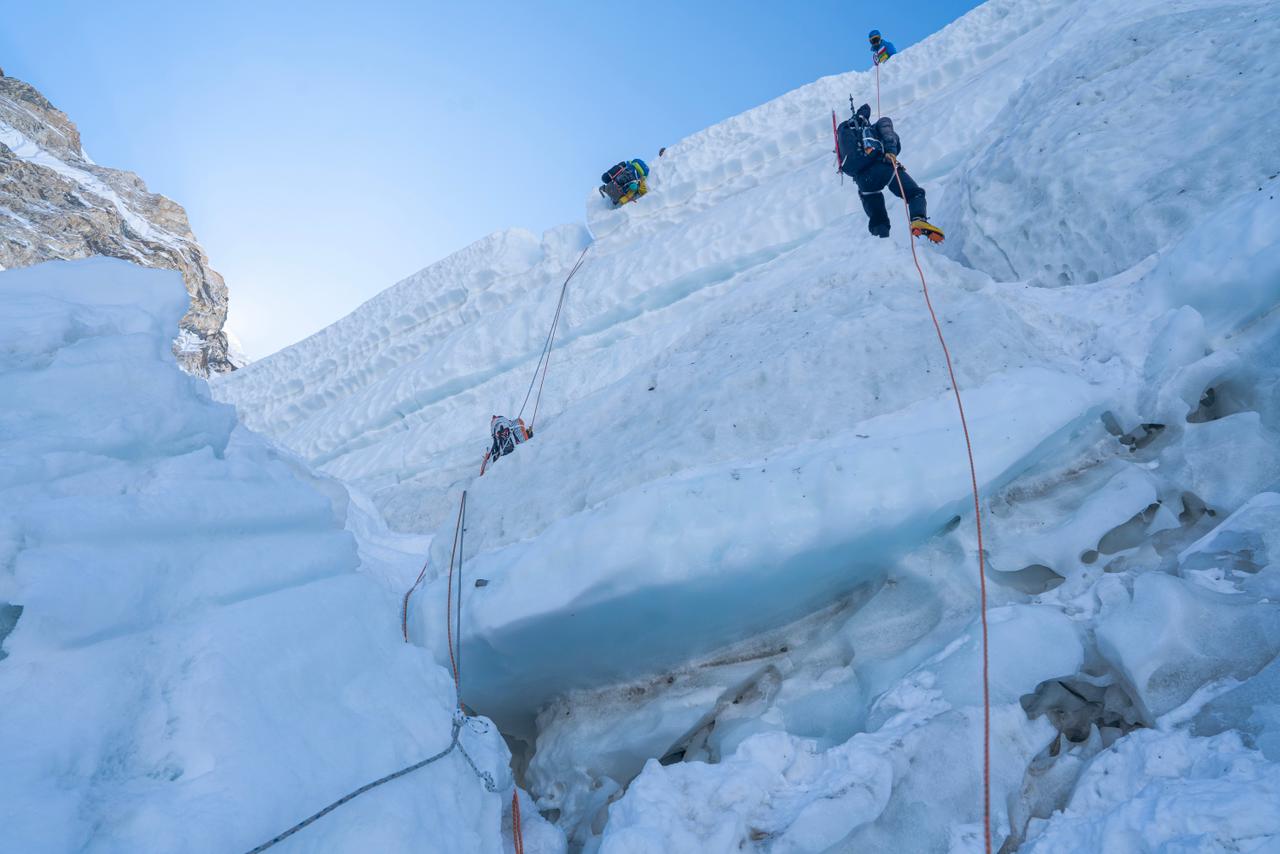
PC: Abiral Rai
The Supreme Court of Nepal on Wednesday ruled against a petition challenging the government’s recognition of holders of the Nepal Mountaineering Association’s (NMA) “red book” certification as mountain guides, concluding that the plaintiffs had failed to provide sufficient evidence to support their claims.
The petition, filed in 2021 by 17 members of the Nepal National Mountain Guide Association (NNMGA), including Pasang Tendi Sherpa, Lopsang Sherpa, Vinayak Jay Malla, Pasang Kidar Sherpa, among others, contested a decision by the Department of Tourism to grant official mountain-guide status to red book holders. The case named both the Department of Tourism and executive members of the NMA as defendants.
At the heart of the dispute lay a long-running tension within Nepal’s mountaineering industry: the distinction between experienced climbers and professionally trained mountain guides. The NNMGA, whose members are certified by the International Federation of Mountain Guides Associations (IFMGA/UIAGM), argued that summiting Everest alone did not qualify an individual to guide clients safely in high mountains.
Under the NMA system, climbers who complete certain expeditions can obtain a red book certification. Critics say the credential requires neither the rigorous technical instruction nor the years of training demanded of IFMGA-certified guides. Becoming an IFMGA guide typically involves around five years of training in Nepal and abroad, covering rock and ice climbing, rescue techniques and mountain safety standards.
The NNMGA had sought a stay order to prevent the NMA from issuing guide certifications to red book holders. Its members argued that conflating expedition experience with professional guiding risked lowering standards in an industry on which Nepal’s international climbing reputation depends.
The dispute also exposed institutional frictions between the two organisations. Although the NMA has historically supported training programmes run by the NNMGA, relations deteriorated after the lawsuit was filed. In February 2022 the NMA reportedly sent letters to 43 Nepali IFMGA-certified guides warning that their memberships could be revoked unless they provided written explanations for their legal action. Loss of membership would effectively bar them from obtaining climbing permits during the mountaineering season.
Despite the legal battle, the two bodies remain closely intertwined. The NNMGA, which is affiliated with the IFMGA, has long worked with the NMA to conduct mountaineering courses in rock climbing, ice climbing and rescue operations. Many instructors teaching NMA courses are themselves internationally certified guides.
Industry stakeholders note that the disagreement is less about employment than about professional standards. IFMGA-certified guides have repeatedly argued that they do not seek to exclude experienced Nepali climbers from the industry. Rather, they say the country would benefit from adopting internationally recognised guiding standards while recognising red book holders as expedition guides rather than fully certified mountain guides.
That distinction matters abroad. Foreign climbers, particularly high-paying clients, often seek IFMGA-certified guides because of their internationally recognised qualifications and extensive safety training.
For many within Nepal’s mountaineering community, the case underscored a broader debate about how the country balances local experience with international standards in one of its most important industries.