The City That Forgot How to Sound
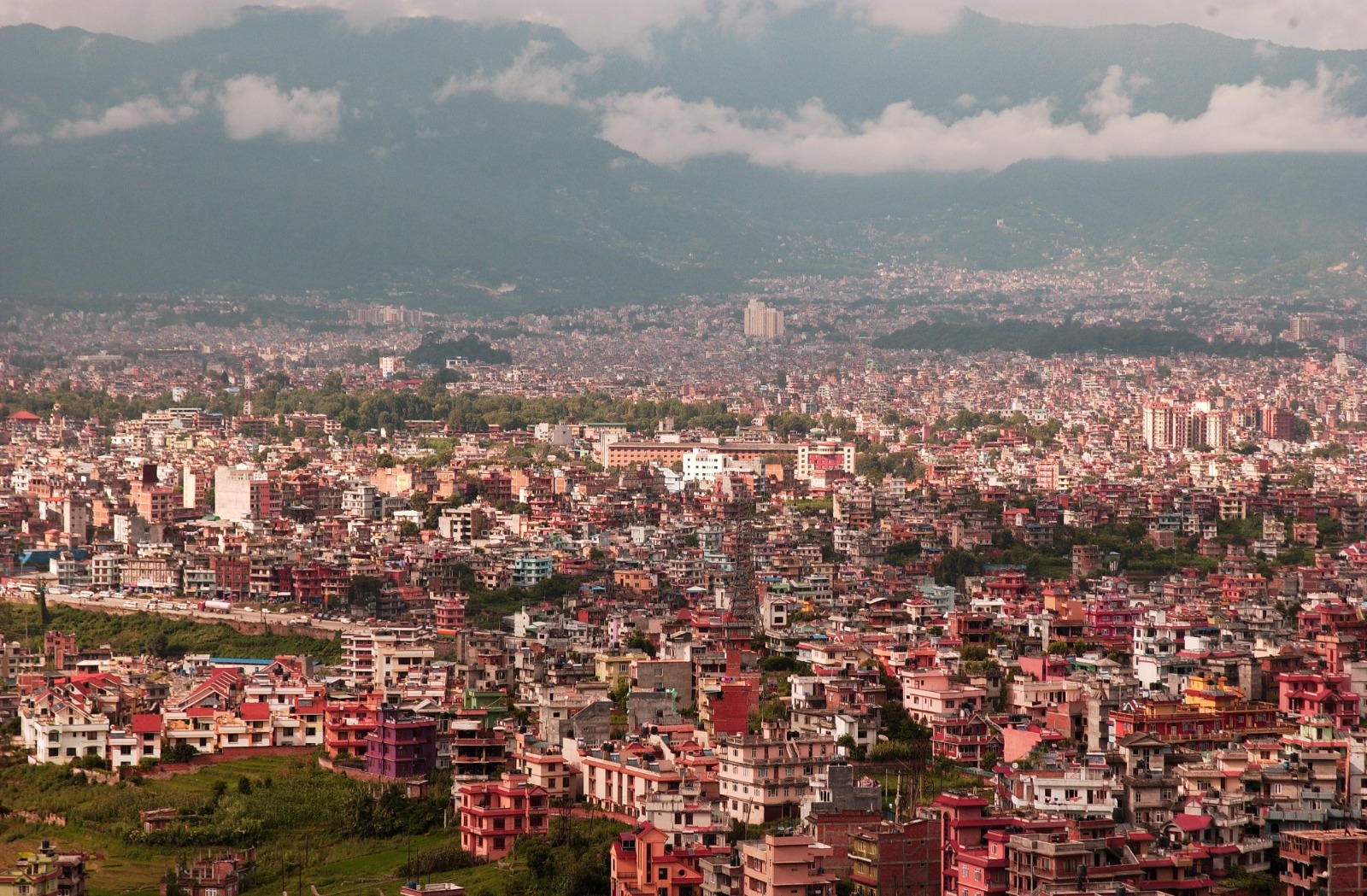
Kathmandu’s natural soundscape is fading beneath rising noise, as birds, rivers and open spaces give way to concrete, traffic and unplanned urban growth.
PC: Prem Thapa
There is a moment each morning when the city almost remembers what it used to be.
It arrives before the traffic thickens, before the day settles into its familiar rhythm. A bird call breaks through. Leaves shift softly. Sound feels layered, not crowded.
Then, slowly, it disappears.
What follows is not silence but a steady mechanical presence. Engines rise, horns break the air, construction takes over. What is lost in that transition is harder to measure but increasingly difficult to ignore.
The city is not just growing louder. It is growing quieter in another way.
For many residents, the change is not abstract.
“I am 70 years old and have lived in Kathmandu for nearly 48 years,” said Netra Prasad Upadhyaya, a former program unit manager at Plan International Nepal, who is living a retired life. “I remember the earlier days, blue skies, balanced rainfall, no rapid construction. Birds would fly in the morning, singing and dancing.”
He spoke of a city that once held space for sound. There were paddy fields inside and outside the Ring Road. Rivers like Bagmati and Bishnumati ran clean enough to bathe in. Trees lined the roads, and vehicles were few.
“Everything has changed,” he said.
Scientific research suggests that what he describes is not simply nostalgia.
A major study published in Nature Communications found that natural soundscapes have become noticeably quieter and less varied over the past twenty-five years, largely because of declines in bird populations and biodiversity.
Researchers reconstructed sound environments across more than 200,000 locations and concluded that the richness of birdsong itself has diminished.
At the same time, the ecological systems that produce those sounds are under strain. A long-term study in Europe found that flying insect biomass has declined by more than seventy-five percent over twenty-seven years, reducing the food base for birds and disrupting entire sound-producing ecosystems.
Together, these changes alter not just what exists in an environment but how that environment is experienced.
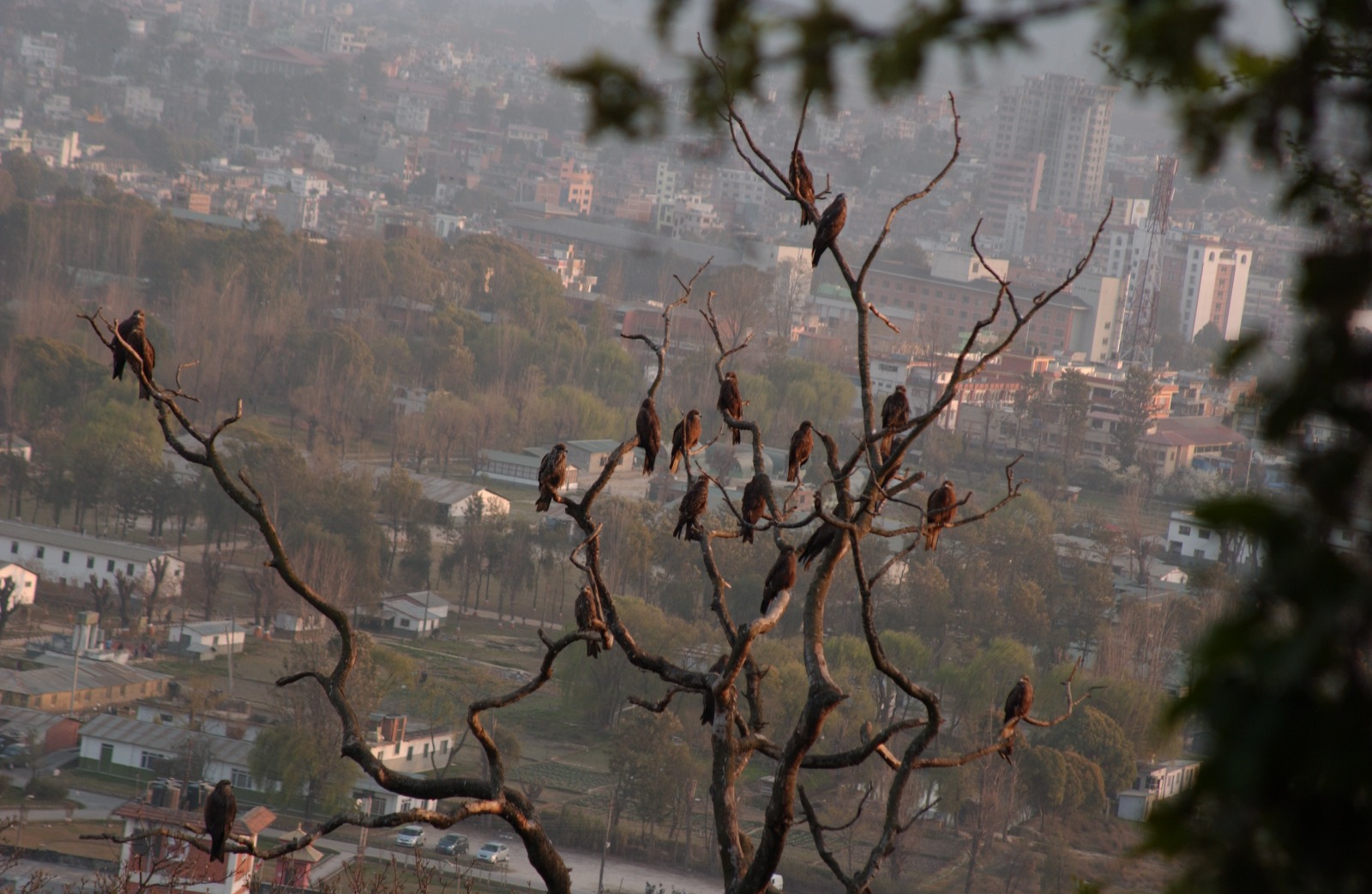
Photo : Prem Thapa
Kathmandu reflects this pattern in local data.
A bird monitoring study conducted in the valley recorded 13,749 individual birds across 102 species but found that species diversity dropped sharply from rural to urban areas In urban zones, the soundscape increasingly comes from a limited number of dominant species such as pigeons, crows, and mynas.
Nepal as a whole still hosts remarkable biodiversity, with between 823 and 915 recorded bird species nationally, according to BirdLife Nepal factsheet. Yet within Kathmandu’s built environment, only around 160 species are now commonly seen, a recent study shows. The reduction is not only ecological. It is auditory.
Recent studies reinforce how uneven this distribution has become. A 2022 study in the Tribhuvan University area documented 71 bird species in a relatively small green zone within the city, underscoring how pockets of habitat can still sustain diversity. In contrast, a 2023 survey along the Bagmati River recorded only 60 species, reflecting the degraded state of river ecosystems.
At the same time, human noise continues to rise.
Studies show that Kathmandu’s average sound levels reach around 66.8 decibels, with busier commercial areas pushing close to 80 decibels, levels that exceed recommended international guidelines. Even areas designated as quiet zones have recorded levels above 80 decibels, far beyond what the World Health Organization considers healthy.
Noise does not just add to the environment. It replaces it.
“There is significant change in the natural soundscape of Kathmandu,” said Ishana Thapa, chief executive officer of Bird Conservation Nepal. She described it as a city undergoing visible ecological transformation.
Farmlands have been converted into settlements, removing habitat for species dependent on open fields. Wetlands have been altered through construction and infrastructure, affecting migratory birds. Forest cover has declined, while population growth and vehicle use have increased air, noise, and light pollution.
The structure of housing itself has changed. Older buildings offered cavities and spaces where birds could nest. Modern construction does not.
“The urban ecosystem in Kathmandu is highly degrading,” she said, “and it is impacting birds and their habitats.”
“I think unplanned urbanization is the key to this situation,” said Ananda Shrestha, a program officer at Bird Conservation Nepal. “More habitat-specific species are being displaced, and only a few adaptable species are dominating.”
This pattern is often described in ecological terms as homogenization. It simplifies the environment. It simplifies the sound.
From an urban and ecological perspective, the problem is not only growth but how that growth is planned.
“Unplanned urbanization is the primary reason for the reduction in natural bird sounds,” said Prem Thapa, a doctoral researcher in Buddhist ecology at Tribhuvan University.
He pointed to everyday decisions that accumulate over time. Trees are cut or planted without considering nesting needs. Pavements are cemented in ways that prevent soil and water recharge. Artificial lighting extends into spaces that disrupt natural rhythms.
“When there is no garden, garden birds do not exist,” he said. He also noted the condition of rivers.
“The pollution of Bagmati and other rivers has significantly reduced bird presence,” he said. “Reduction in birds is an indicator of increasing pollution.”
For younger residents, the change is experienced differently.
Ganga G. C., 29, who moved to Kathmandu from Kavrepalanchok for her education, connects it to the destruction of older buildings following the 2015 earthquake.
“When those buildings collapsed, many birds lost their nests,” she said. “Old houses were more friendly habitats for birds. The new buildings do not support them in the same way.”
The loss is not only ecological. It is emotional.
“As a nature lover, I have come to realize how deeply our disconnection from birds and nature affects mental well-being,” said Anjali Subedi, a journalist and healing art therapy coach.
“I have felt it myself, and I have seen it in others. People talk about how living in dense cities drains their connection to life itself.”
She described something less visible but widely felt.
“Once, the presence of greenery and birds kept life vibrant,” she said. “Now, in these concrete environments, that feeling fades.”
“We are unknowingly desperate for those moments when nature returns to us,” she added.
What disappears from a city is not only measured in species counts. It is measured in texture.
In variation. In the feeling that a place is alive not just through movement but through presence.
As natural sound fades, the relationship between people and environment shifts with it. What was once background becomes absence. What was once expected becomes rare.
Kathmandu is not silent. But its voice has changed. Where there were once layers of sound, birds, insects, wind, there is now a more singular tone. A continuous hum of movement and machinery.
Cities do not lose nature all at once. They lose it in fragments. A field becomes a building. A river loses its clarity. A tree disappears. A bird does not return.
And slowly, almost without notice, the sound changes. The city continues to speak. Just not in the same voice as before.


