“Take care, didi...”
Klára [Kolouchová] tumbled down the mountain slope before my eyes and vanished into the vast darkness of the night, on the westernmost peak of the Himalayas.

PC: Photo courtesy: Taraman Tamang
On July 3, I arrived back in the base camp of Mount Nanga Parbat (8,126m), dazed and lost. I had just seen my client and dear friend disappear down the mountain slope around Camp 2. I was grieving and carried the heavy guilt of returning back alone. But then my phone started buzzing shaking me out of my reverie. It had WIFI signal once again. My phone was flooded with messages about the disappearance of Klára Kolouchová. Klára was a prominent and a highly respected climber from the Czech Republic who I was guiding.
For days afterwards, the inquiries kept coming—relentless, overwhelming.
I could not address most of them. I hope people understand that I went through an incredibly traumatic experience on that mountain. While I was still trying to process what had happened and summon the strength just to stand, I was being bombarded with questions, speculations, and assumptions. How could I respond, when I wasn’t even myself?
I left that mountain having witnessed one of the most disturbing events of my life. Now that I have had some time to reflect and accept it, I am better prepared to talk about that day.
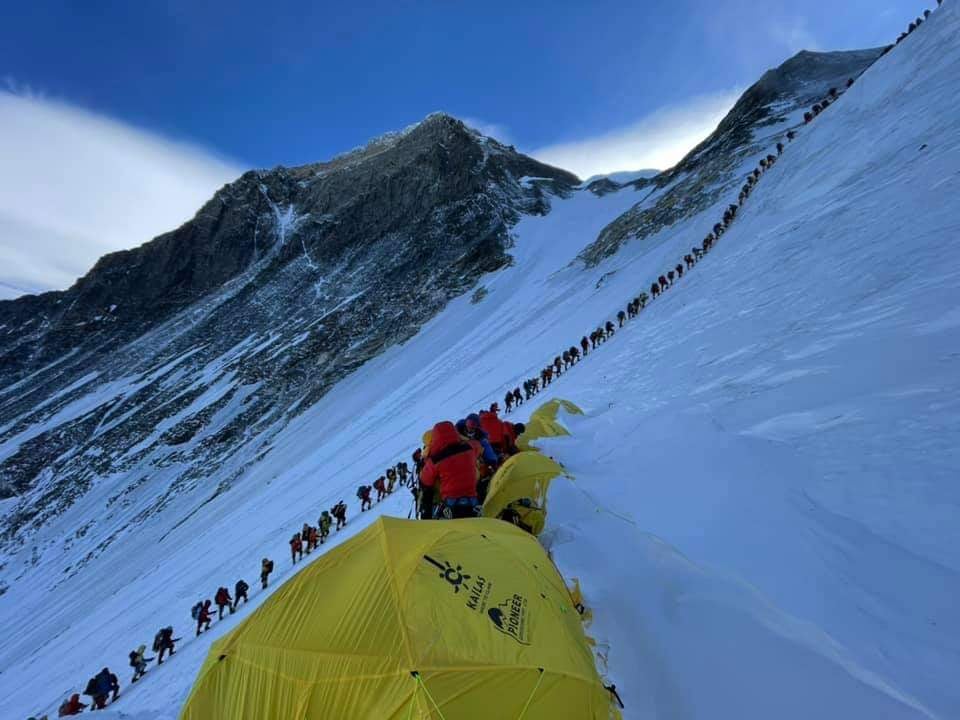
On the evening of July 2, around 6 PM, Klára and I began our summit push of Nanga Parbat in Pakistan from its Camp 3, along with about a dozen other climbers. The weather was particularly challenging this season. Like everyone else in a commercial expedition, we aimed to make use of the narrow climbing window on the world’s ninth-highest peak. Infamously known as the "Killer Mountain" due to its deadly terrain and unforgiving weather, it has claimed many lives over the years.
After approximately three hours of climbing, we reached around 7,100 meters—just 100 meters below Camp 4. By then, other climbers had overtaken us. Klára realized she wasn’t moving fast enough to reach the summit. She told me she didn’t have the stamina to push higher. Despite my encouragement, she made the difficult but wise decision to turn back. I respected her choice. On mountains like this, safety always comes before the summit.
We began our descent around 10 PM. By the time we returned to Camp 3, it was midnight. We melted snow for hot water, packed up our gear, and continued descending towards Camp 2.
My backpack was heavier than usual. I carried all her personal gears along with full oxygen bottles. Klára was always thoughtful and kind to her guides, especially to Sherpas. Aware of my burden, she said, “Taraman, your bag is heavy, so come slowly. I’ll go ahead and wait for you at Camp 2, okay?”
I replied, “Okay. Take care, Didi (Big Sister).”
That was our last conversation.
Usually, I would rig her rappel line, and she would descend first while I followed closely behind. But this time, she didn’t wait. I’m not sure why, perhaps she thought it would be easier or quicker to descend on her own. I still have no clear answer. Maybe she set up the system herself.
I was preparing my own gear when I suddenly heard her scream. I looked down and saw her falling and then rolling down the cliff. She had slipped and fallen off the fixed line. It happened right before my eyes.

She fell at the location marked by the red line along the slope
We had some 40 meters distance between us. I watched helplessly as she tumbled down the slope, disappearing into the darkness beyond the reach of my headlamp. I was completely alone on the face of this massive mountain, in the middle of the night. No one was nearby. Some teams were nearby the summit, and others were resting at Base Camp.
I was in shock. My mind went blank. I felt a mix of fear, guilt, and heartbreak. I didn’t know whether to wait at Camp 2 or continue descending.
I gathered myself and contacted other climbers who were moving higher up. I was able to reach our expedition leader via radio. He assured me that it was not my fault and advised me to keep descending.
Shaken and horrified, I made my way down. It was my first time experiencing the death of a client, that too in a foreign country. I reached Base Camp the next day around 2 PM and immediately reported everything to the base camp manager. Again, I was told I had done everything right. When the rescue team arrived, I joined the helicopter and pointed out the location of the accident—it had occurred just above Camp 2.
This was the first time I had lost a client. I still don’t know what exactly went wrong. Klára was a skilled, experienced climber. We had climbed Dhaulagiri together earlier in spring, but she had turned back just above Camp 2 then as well. Later, she told me about her plan to climb Nanga Parbat and asked me to join her again. She trusted me after our first expedition together.
I’ve been working as a climbing guide for six years now. I’ve summited nearly a dozen mountains. In 2022, I miraculously survived an avalanche on Manaslu that swept several climbers from Camp IV to Camp III. My own brother, Mohan Singh Tamang, broke his leg in that disaster. We lost our friend Anup Rai. But until now, I had never lost a client.
All other climbers on the mountain summited successfully, including Nirmal “Nimsdai” Purja -without supplemental oxygen. I had summited Nanga Parbat before, but this time I could neither lead Klára to the top nor bring her back down safely. I am devastated.
We had developed a close bond during our time together. Our relationship was more than guide and client—we were like brother and sister. We supported each other through challenging climbs. She was a technical, capable climber with multiple 8,000-meter peaks to her name.
Her loss has left me deeply saddened. I will always remember her strength, her humility, and the deep respect we had for each other.
(As told to Everest Chronicle)