Nepal’s parliament gets first mountaineer lawmaker
Record-breaking climber Mingma Gyabu Sherpa enters parliament while Rastriya Swatantra Party’s surprise victory ushers in Nepal’s first millennial prime minister

PC: Mingma Gyabu Sherpa
Renowned climber Mingma Gyabu Sherpa has been nominated as a member of Nepal’s parliament, becoming the first mountaineer to serve in the legislature in the 66-year history of parliamentary practice in the country.
Sherpa, who holds multiple mountaineering records, will serve in the House of Representatives of the Federal Democratic Republic of Nepal. His appointment marks another milestone for the climber, who has already set several records in high-altitude mountaineering.
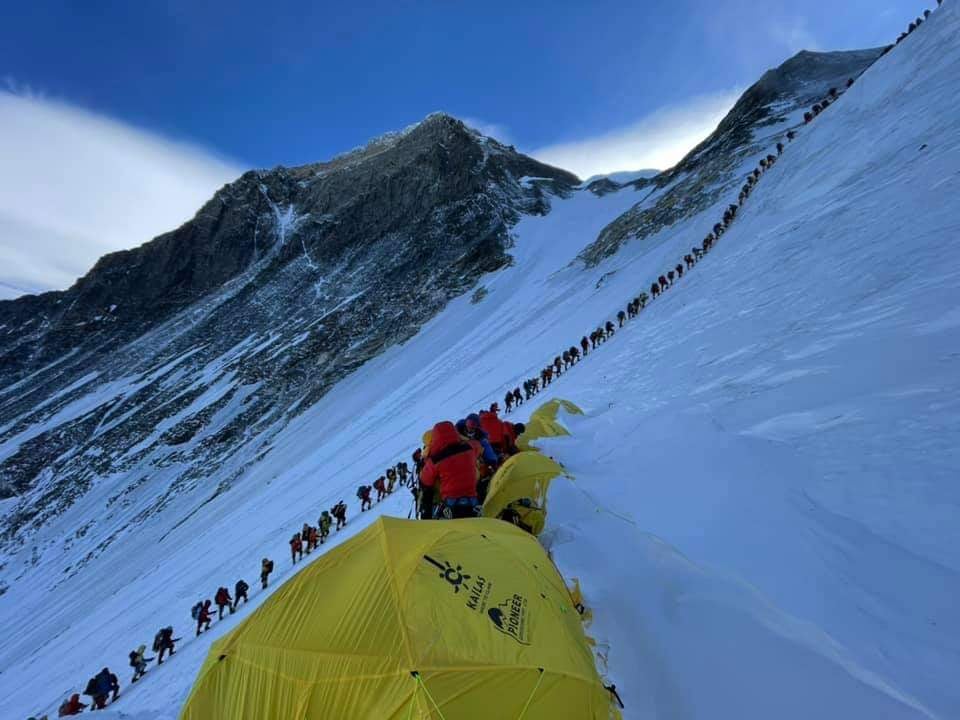
Until 2024, Sherpa was the youngest climber to summit all 14 peaks above 8,000 meters. He also holds a Guinness World Record for the fastest time to climb Mount Everest and K2 and was among the 10 Nepali climbers who made the historic first winter ascent of K2 in 2021.
Born in Faktanglung Rural Municipality in Taplejung district in eastern Nepal, Sherpa grew up in a farming family in a remote Himalayan community. Although he belongs to the Sherpa ethnic group, he was the first person from his village to pursue professional mountaineering.
His journey into climbing began unexpectedly. In 2007, he travelled to Kathmandu as a student, but political unrest prevented him from returning home. To support himself, he began working as a porter for trekking tourists, earning a small daily wage.
In 2009, while working as a kitchen helper at Manaslu Base Camp, Sherpa saw international climbers preparing for expeditions, which sparked his dream of becoming a mountaineer.
He has successfully summited peaks higher than 8,000 meters 35 times, including nine ascents of Mount Everest. He has also climbed K2 six times, a peak widely considered the most dangerous mountain in the world. Sherpa is the co-owner of the expedition company Elite Exped, founded by famed mountaineer Nimsdai Purja.
From humble beginnings as a porter to becoming a world-renowned climber, Sherpa’s story reflects Nepal’s mountaineering heritage.
On August last year, Sherpa was elected first vice president of the Nepal Mountaineering Association (NMA), the umbrella body for mountaineers and mountain tourism entrepreneurs.
Sherpa has been nominated to parliament by the Rastriya Swatantra Party (RSP) under the proportional representation electoral system.
The RSP, founded just over four years ago, emerged as the largest party in the recent election, defeating Nepal’s traditional political parties in a dramatic victory and winning nearly two-thirds of the seats in parliament.
Balendra Shah, the rapper-turned-politician and former mayor of Kathmandu widely known as Balen, was projected by the party as its prime ministerial candidate during the election. Political analysts say Shah’s popularity played a major role in the party’s success.
Shah, 35, had earlier been the first choice for prime minister of the interim election government backed by the Generation Z-led movement that toppled the government in September last year. He declined the position, and former Chief Justice Sushila Karki was appointed interim prime minister to lead the government that conducted this month’s elections.
After the election was announced, the RSP convinced Shah to run as its candidate for prime minister. Shah resigned as Kathmandu’s mayor in January and launched a two-month campaign that rallied significant public support for the party, surprising many observers with the scale of the victory.
The RSP won 125 seats under the first-past-the-post system and secured 57 seats through proportional representation, receiving about 48% of the total votes cast.
With the victory, Nepal will have its first millennial prime minister. The country has often been led by septuagenarian leaders from traditional parties who have taken turns heading the government.
Nepal follows a mixed electoral system that combines first-past-the-post and proportional representation. The results surprised many political analysts, who had long argued that no party could secure a clear majority because of the proportional representation system.
The RSP defied those expectations by winning 182 seats in the 275-member parliament, just two seats short of the two-thirds majority required for constitutional amendments.
Another record-holding climber, Mingma Sherpa, who contested the House of Representatives seat from Sankhuwasabha district under the directly elected system, lost by 621 votes to a candidate from the Communist Party of Nepal (Unified Marxist–Leninist), the country’s largest traditional party.
“For me, elections are not a battlefield of winning and losing, but an opportunity to see who can take greater responsibility,” Sherpa wrote on social media. “My commitment to working responsibly for the welfare of Sankhuwasabha existed yesterday, continues today, and will remain tomorrow.”
Sherpa is also known as the first Nepali and South Asian climber to summit all 14 peaks above 8,000 meters. He runs Nepal’s largest expedition company, Seven Summit Treks, and serves as executive director of Heli Everest.
Sherpa and his brothers, Chhang Dawa Sherpa and Tashi Lakpa Sherpa, also hold a Guinness World Record as the first siblings to complete the Seven Summits, the highest mountains on each of the seven continents, in 2024