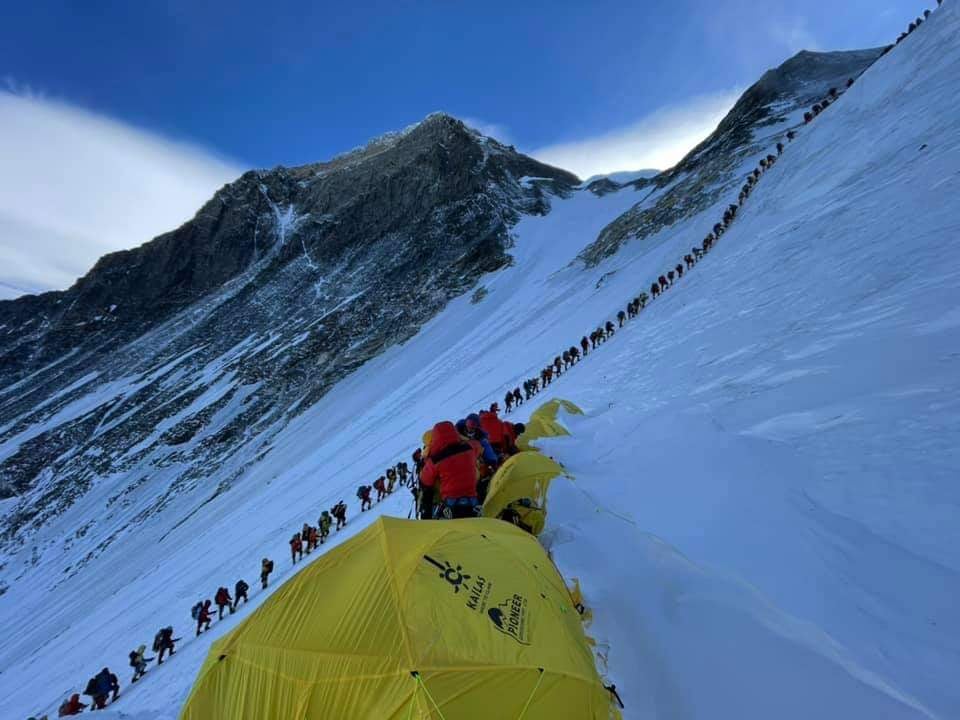
Nepal’s climber-MP launches late Everest bid with parliament flag in hand
Mingma Gyabu Sherpa, a record-holding mountaineer turned lawmaker, says his ascent of Mount Everest is meant to promote national unity, climate awareness and Nepal’s mountain tourism industry.
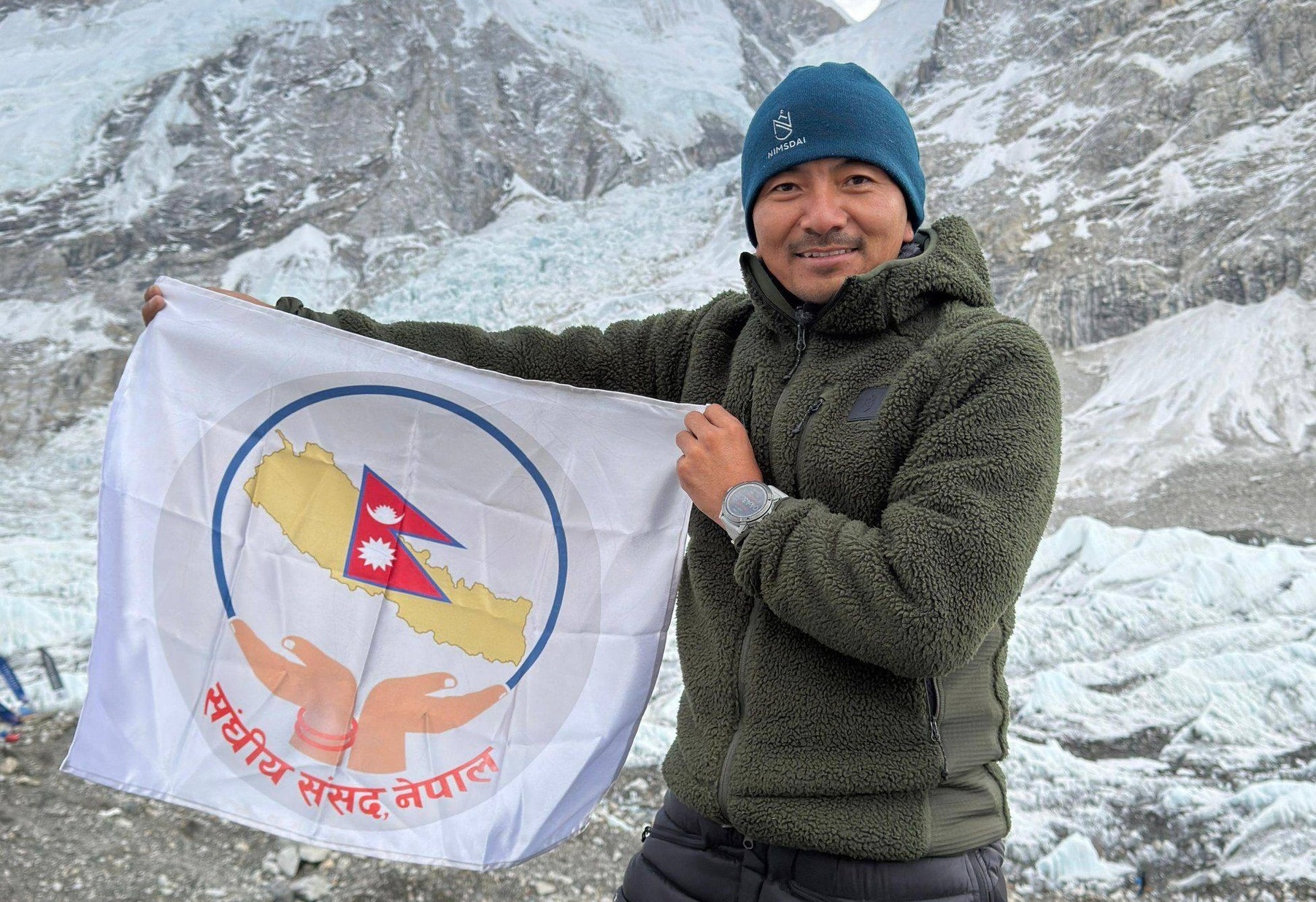
Mingma Gyabu Sherpa, Nepal’s only member of parliament drawn from the climbing community, has begun a late-season attempt on Mount Everest, arriving at base camp on May 19 even as the season’s second major wave of climbers was already standing on the summit.
For most climbers, such timing would appear reckless. The principal weather window that enabled more than 500 ascents this spring is expected to close within days, while many teams have already begun descending from the mountain. Sherpa, however, insists he still has time.
If successful, he would become Nepal’s first sitting member of parliament to summit Everest.
Sherpa has given the expedition a political slogan—Sadan Dekhi Summit Samma (“From Parliament to the Summit”). Before departing for the mountain, he collected the flag of Nepal’s federal parliament from the Speaker of the House, intending to carry it to the top of the world.
“As a member of parliament, I want this expedition to become a message for nation-building and for all Nepalis to unite in developing the country,” he told Everest Chronicle.
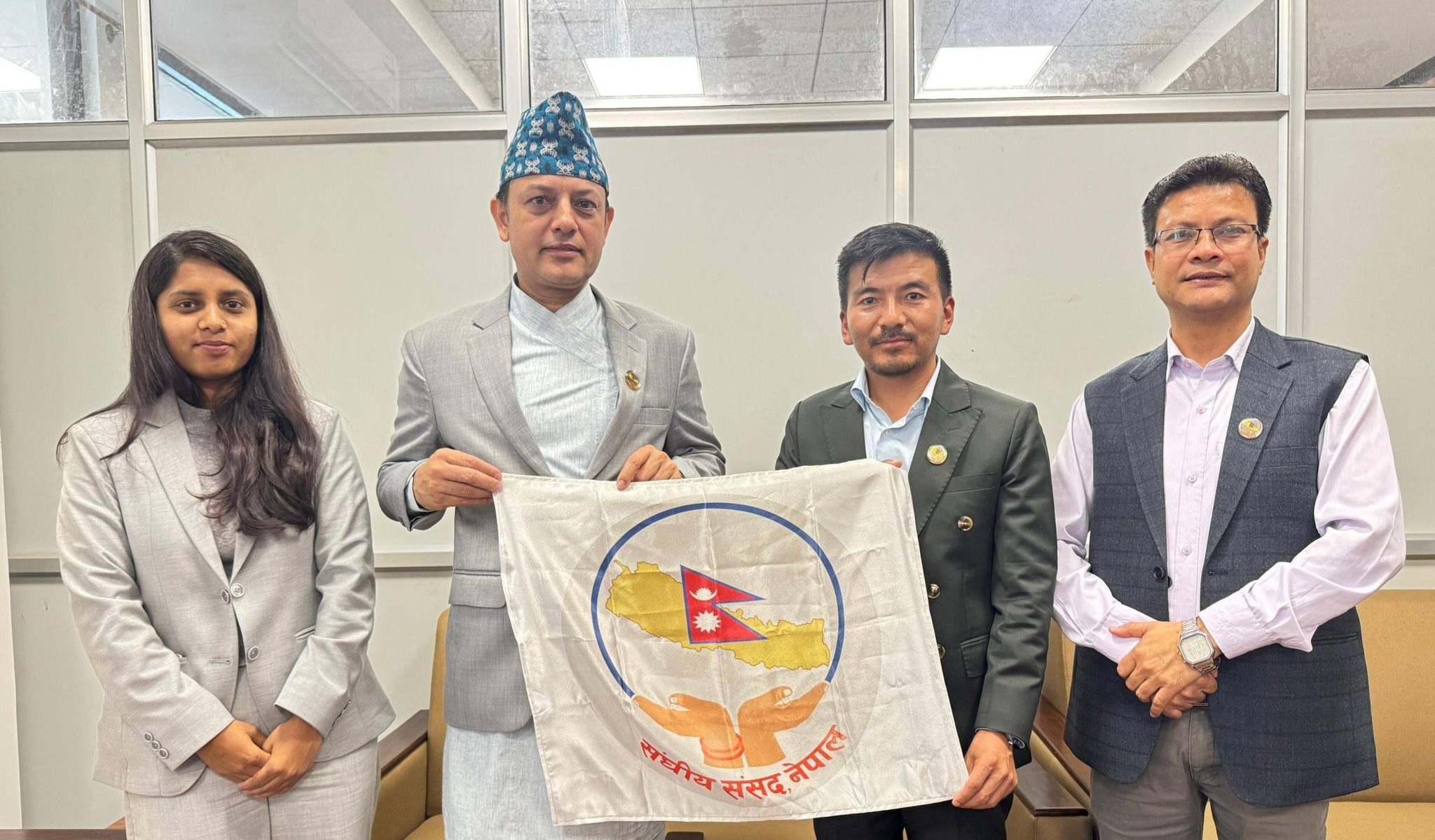
From left : Deputy Speaker Rubi Kumari Thakur, speaker of the House Dol Prasad Aryal, Mingma Gyabu Sherpa and Rastriya Swatantra Party chief whip Prakash Chandra Pariyar
The symbolism is deliberate. Nepal, home to eight of the world’s 14 highest mountains, has long used Everest as a marker of national identity and international prestige. Sherpa says his climb is also intended to draw attention to climate change, the importance of the Himalayas and the central role of tourism in Nepal’s economy.
“Although we stand at the top of the world geographically, Nepal remains weak in terms of development,” he said. “By carrying the national flag and the parliament flag to the summit of Sagarmatha, I want to send a message to all Nepalis and lawmakers to move forward together in building the country.”
Few Nepali climbers possess credentials stronger than his. Until 2024, Sherpa held the distinction of being the youngest climber to summit all 14 mountains above 8,000 metres. He has completed 35 ascents of peaks above that altitude, including nine summits of Everest and six of K2, the notoriously dangerous peak often regarded as the world’s hardest 8,000-metre mountain.
Yet his route into mountaineering began with economic necessity rather than ambition. In 2007, he travelled to Kathmandu as a student, only to find political unrest preventing his return home. Stranded in the capital, he began working as a porter for trekking groups, carrying heavy loads for modest wages.
Two years later, while employed as a kitchen helper at Manaslu Base Camp, he watched foreign climbers preparing for expeditions. The spectacle inspired him to become a climber himself.
From those beginnings, Sherpa rose steadily through Nepal’s expedition industry to become one of the country’s best-known mountaineers and entrepreneurs. He later co-founded Elite Exped alongside Nirmal Purja, the celebrated climber better known as Nimsdai Purja.
Last August, he was elected first vice-president of the Nepal Mountaineering Association, which represents mountaineers and mountain tourism entrepreneurs. He subsequently entered parliament through the proportional representation system as a nominee of the Rastriya Swatantra Party.
Despite the lateness of the season, Sherpa appears unconcerned. Unlike most Everest aspirants, he has yet to undertake acclimatisation rotations above base camp this spring. But with 35 climbs above 8,000 metres behind him, he suggested he understands better than most how to judge weather windows and altitude adaptation.
“The summit will happen soon,” he said. “Probably by the end of May.”