Missing Sherpa exposes fault lines in Everest's rescue system
Days of confusion over responsibility delayed the search for a Sherpa guide who vanished above Camp III, casting a shadow over one of Everest's most successful climbing seasons.
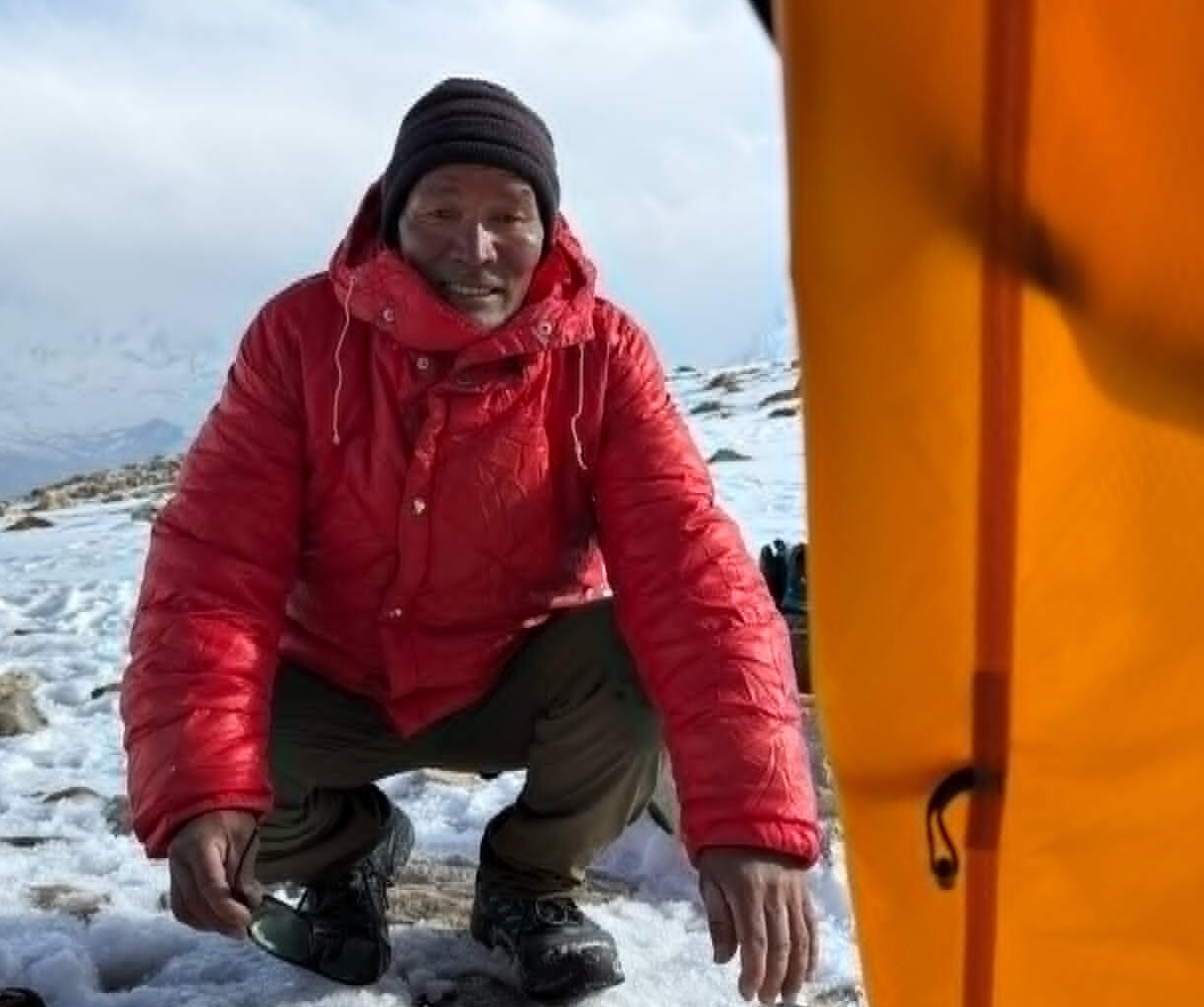
A helicopter dispatched on June 3 to search for Dawa Sherpa, one of the last climbers remaining on Mount Everest after Nepal's spring climbing season ended, found no trace of him.
Dawa, 57, also known as Hillary Dawa from Okhaldhunga district, set out on May 28 with a Polish client on a summit attempt. Whether he reached the 8,849-metre peak remains unclear. He has been missing since May 29 and is believed to have disappeared somewhere above Camp III.
According to Dawa Sherpa, owner of Himalayan Traverse Adventure, the missing climber was last seen near the Yellow Band, above Camp III. The Polish client he was accompanying had already descended.
Further details emerged on June 2 when Chris Thrall, a British client of Himalayan Traverse, posted a video describing his final encounter with Dawa. Thrall said he and his Sherpa guide met Dawa and the Polish climber at Camp IV. The following morning, the Polish climber descended with Thrall's guide, leaving him and Dawa to make their way down together.
At a point near the Yellow Band, Dawa stopped to rest. "I turned around and asked, 'Hillary (Dawa), are you okay, brother?'" Thrall recalled in the video. "He said, 'Yes, yes, fine. Please, go, go.'"
Thrall continued his descent. That was the last known interaction with Dawa.
What followed was a dispute over responsibility. Thrall and the Polish climber's permit had been obtained through 8K Expeditions on behalf of Himalayan Traverse Adventure, a smaller operator.
Himalayan Traverse argued that 8K, as the permit holder, was responsible for organising search-and-rescue efforts. 8K rejected the claim.
"We only assisted with the permit process. We did not organise the expedition," said Pemba Sherpa, executive director of 8K Expeditions, placing responsibility on Himalayan Traverse.
The Department of Tourism has yet to determine where legal responsibility lies. Himal Gautam, a director at the department, said officials recognised only the permit holder in their records. "Since 8K Expeditions obtained the permit, that is the company we deal with," he said.
The disagreement delayed search efforts at a critical time. Public attention was drawn to the case only after family members and Dawa's villagers demanded action. By then, five days had passed.
Mountain guides say the delay may have proved decisive. By early June, they argue, the chances of locating a missing climber from the air had diminished sharply. Dawa may have been buried by fresh snow or fallen into a crevasse.
Some reports suggest he was last seen above the Yellow Band, higher than the area reached by the search helicopter.
According to Pemba, at the request of Dawa’s family, 8K Expeditions launched an aerial search operation with a cameraman and a relative of Dawa on board. “It searched from the Khumbu Icefall up to Camp III, as high as the helicopter can fly, but no trace was found,” he said.
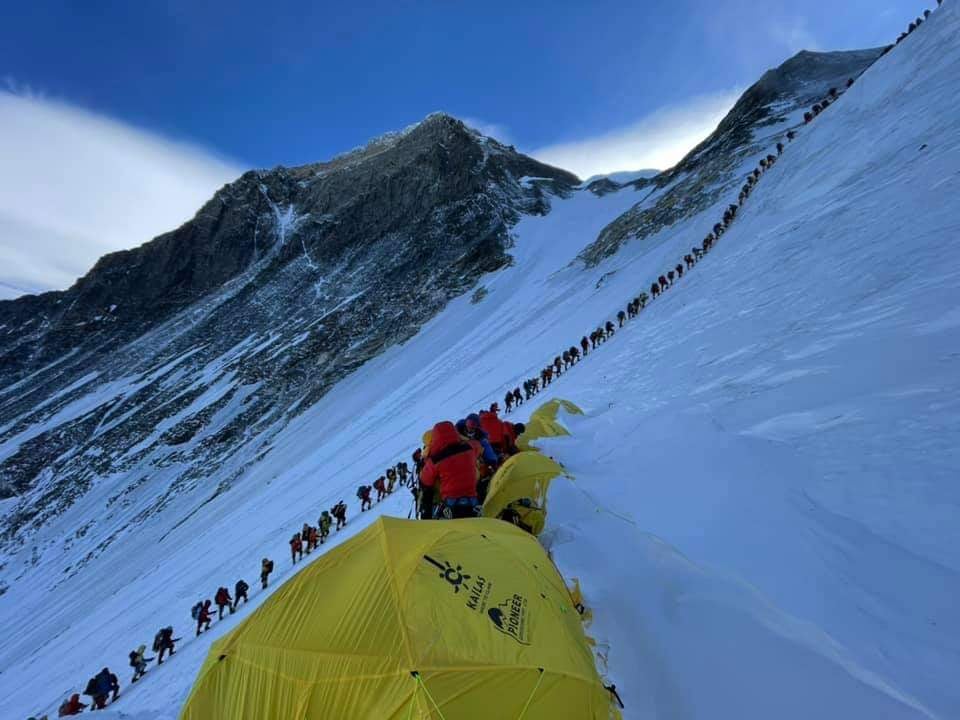
The circumstances made rescue particularly difficult. Dawa was among the final people descending the mountain as climbers rushed to cross the Khumbu Icefall before seasonal ladders were removed. Few personnel remained on the route, and most Sherpa support teams had already left base camp.
According to expedition sources, Dawa had originally been assigned as a cook at Camp II rather than as a professional mountain guide. After the company's designated guide reportedly failed to accompany the expedition, he was sent higher on the mountain to assist the client.
Critics have also questioned the timing of the summit push. The team reportedly reached the summit on May 29, the very day the Sagarmatha Pollution Control Committee began dismantling ladders in the Khumbu Icefall.
"It was a blunder to send climbers to the summit on the final day of the season," said Pemba. "There are far fewer options for organising a rescue."
Guides argue that an earlier alert could have mobilised rescuers while helicopters were still operating on the mountain. Flights evacuating climbers from other expeditions might have carried rescue personnel to Camp II.
Two clients and a Sherpa guide were airlifted from Camp II on May 31.
The case has stirred frustration throughout Nepal's mountaineering community. It has also exposed a persistent weakness in Everest's expedition industry: smaller operators often lack the financial resources and insurance backing needed to launch costly rescue operations at short notice.
For many in the industry, the episode raises uncomfortable questions about accountability on the world's highest mountain.
The 2026 spring season was widely regarded as one of Everest's most successful. Yet the disappearance of a Sherpa worker has cast a shadow over that achievement, exposing the murkier realities of expedition economics, rescue obligations and the unequal value often placed on lives in the high Himalaya