Late and weak monsoon raises alarm for Nepal’s agricultural economy
Delayed monsoon and rising heat strain agriculture, with officials warning of weaker rainfall, lower paddy output and mounting climate risks across the country.
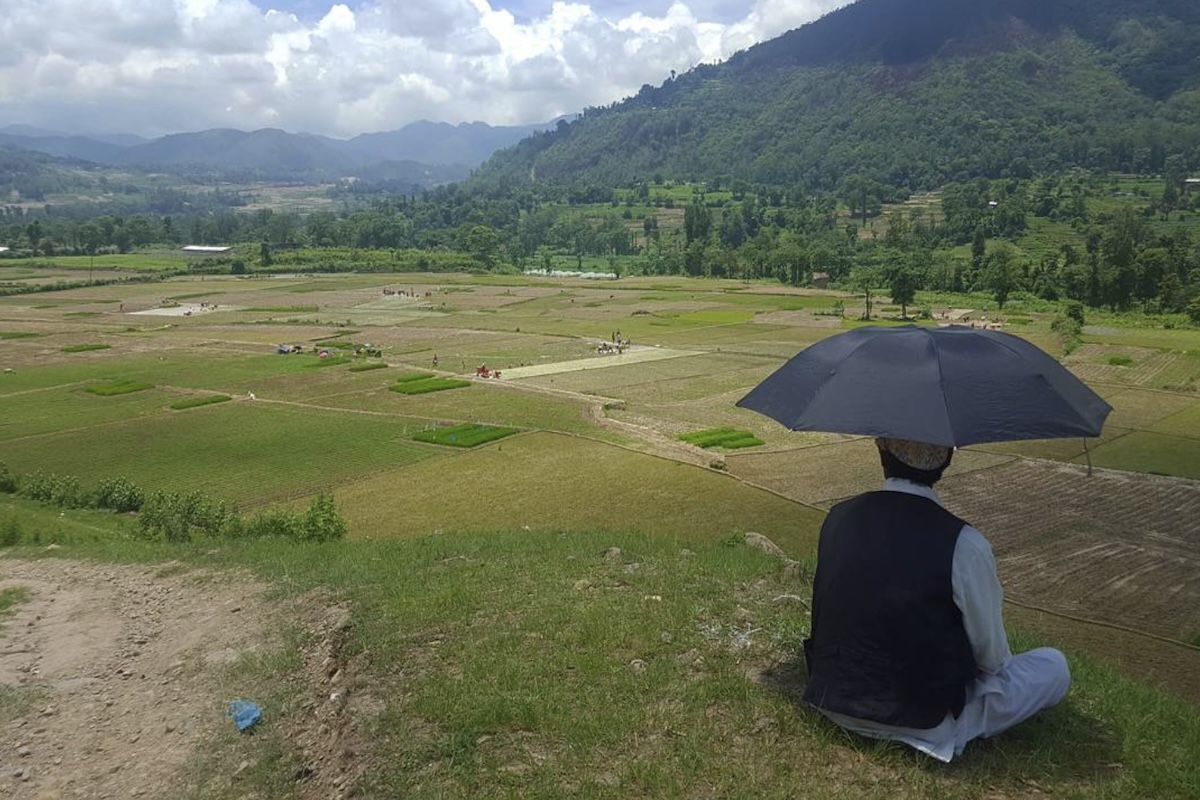
A farmer watches his neighbour prepare a paddy field after a five-day wait for rain, as repeated rainfall failures force reliance on river water for irrigation.
PC: Dewan Rai
Nepal's annual monsoon, the lifeblood of its agricultural economy, arrived six days late this year, heightening concerns over food production as meteorologists warn that the weather system is being weakened by an emerging El Niño pattern.
The Department of Hydrology and Meteorology (DHM) announced on Friday that the monsoon had entered parts of Koshi Province, marking the official onset of the rainy season. Yet officials cautioned that the system remains weak and could take several days to spread across the rest of the country.
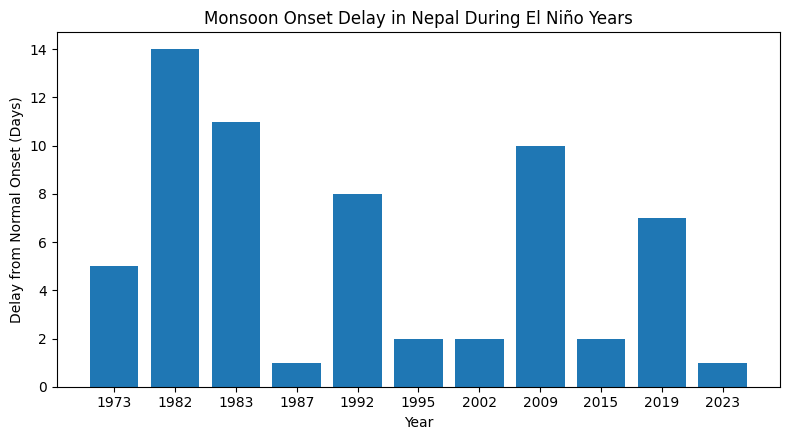
The delayed arrival follows a pattern observed during previous El Niño years. DHM records show that during the past 11 El Niño events, monsoon onset in Nepal was delayed by between one and 14 days. In 1982, the rains arrived two weeks late, while in 2023 they were delayed by only a day.
"An El Niño year does not automatically mean a delayed monsoon or below-average rainfall," DHM spokesperson Bibhuti Pokharel told Everest Chronicle. "But rainfall often arrives later and remains below normal. This year, that tendency appears likely to be stronger."
The monsoon season, which normally lasts from June 13 to October 2, delivers around 80 percent of Nepal's annual rainfall. It sustains rice cultivation, replenishes drinking-water sources, recharges groundwater reserves and feeds rivers that power much of the country's hydropower sector.
Meteorologists also expect the delayed onset could push back the monsoon's withdrawal, traditionally occurring in early October.
Rice Farmers Under Pressure
The timing of the monsoon is critical for Nepal's rice farmers, many of whom are currently transplanting seedlings. Delayed rainfall has forced farmers in large parts of the country to rely on groundwater and costly irrigation systems.
"El Niño is expected to bring delayed and reduced rainfall, which is already affecting paddy transplantation," said Ram Krishna Shrestha, Joint Secretary at the Ministry of Agriculture, Forests and Environment.
In Supauli, a farming community in Tilottama Municipality of Rupandehi district, farmer Lal Bahadur Tharu said he had been forced to pump groundwater from borewells to prepare fields and keep newly transplanted rice alive.
"Usually rainfall softens the fields before transplantation," he said. "This year we had to irrigate before planting and continue pumping afterward just to keep the seedlings alive."
The lack of rain has coincided with intense heat. On June 19, Bhairahawa recorded the country's highest temperature at 41.4 degrees Celsius. Tharu's village lies only a few kilometres away.
"People keep asking us when the rains will arrive because the heat is becoming unbearable," Pokharel said. "The biggest concern now is rice transplantation. Farmers with irrigation can continue cultivation, but rain-fed areas have very limited options."

DHM spokesperson Bibhuti Pokharel Pic: Dinesh Regmi
Rice is Nepal's most important staple crop and the backbone of rural livelihoods. Preliminary government estimates indicate paddy production could fall by 4.2 percent in the current fiscal year, declining from 5.96 million metric tonnes to around 5.71 million tonnes.
The risks are amplified by Nepal's limited irrigation coverage. According to the Economic Survey 2025/26, only 44.63 percent of cultivable land had access to irrigation facilities as of mid-March.
"Rice seedlings should ideally be transplanted within 21 days," said Bishnu Hari Devkota, an undersecretary at the ministry's Climate Change Management Division. "If rainfall is delayed beyond that window, both productivity and overall production begin to decline."
Agriculture remains central to Nepal's economy. The 2021 National Agricultural Census found that 62 percent of households are engaged in farming, while the sector contributes roughly a quarter of the country's gross domestic product.
Although the government's Economic Survey projects overall agricultural growth this fiscal year, food-grain production is expected to decline by 1.63 percent because of increasingly erratic weather patterns.
Farmers Already Feeling the Effects
In the eastern hill district of Ilam, farmer Dawa Sherpa says unusual weather patterns have already reduced tea and vegetable yields.
"It rained throughout winter, but now that the rainy season has arrived, we have received very little rainfall," he told Everest Chronicle. "The irregular weather has affected both tea and radish production."
Such disruptions are becoming increasingly common as climate change alters long-established seasonal patterns across the region.
Not Yet a Full Monsoon
Despite rainfall in many parts of the country in recent weeks, meteorologists say much of it has been generated by western disturbances and local weather systems rather than the monsoon itself.
"These systems can provide temporary relief, but they do not produce monsoon-scale rainfall," Pokharel explained. "The moisture flow from the Bay of Bengal and the Arabian Sea has not yet fully established itself over Nepal."
As a result, recent showers have been brief, and localised, typically lasting less than half an hour, rather than the widespread and sustained rainfall associated with a mature monsoon system.
Preparing for a Drier Season
The Nepal Agricultural Research Council (NARC) has warned that most parts of the country are likely to receive below-average rainfall during the June-September monsoon season, while temperatures are expected to remain above normal.
The agency has urged farmers to harvest and store rainwater, construct farm ponds and adopt climate-smart techniques such as direct-seeded rice, alternate wetting and drying, the System of Rice Intensification (SRI), and mulching.
Government agencies are also preparing for weather-related disasters. The National Disaster Risk Reduction and Management Authority (NDRRMA) has intensified coordination among security agencies, humanitarian organisations and local governments ahead of the peak monsoon period.
Home Minister Sudhan Gurung has instructed authorities to identify areas vulnerable to floods, landslides, drought and inundation, strengthen early-warning systems and improve emergency response capacityZ
For climate experts, however, the delayed monsoon is part of a broader trend.
"We already know rainfall may be lower this year, so planning ahead is essential," Pokharel said. "We need alternatives for water supply and agricultural production. Climate change is already affecting Nepal, and El Niño adds another layer of uncertainty. Adaptation is no longer optional."


