Everest records busiest summit day on Nepal side as 270 climbers reach the top
An 11-hour summit push shattered the previous single-day ascent record on Mount Everest, as congestion mounted in the death zone during a compressed weather window.
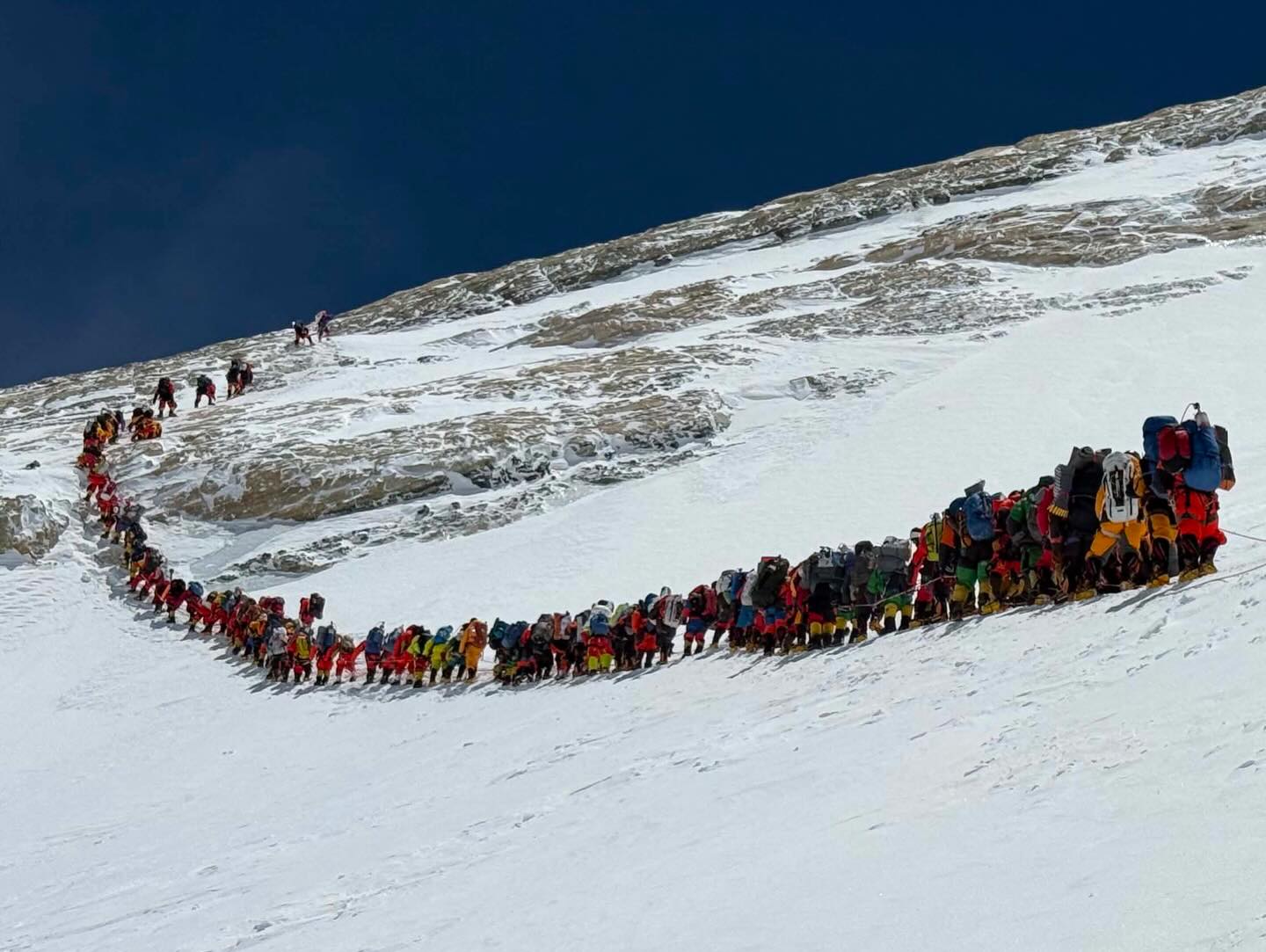
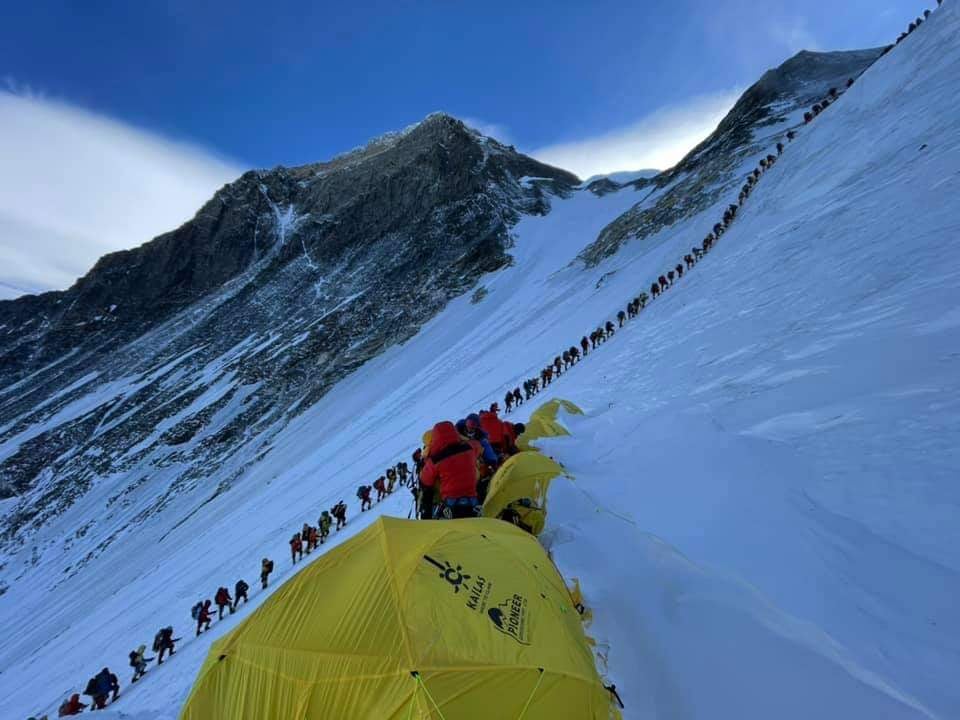
A serpentine queue of climbers winds through the death zone on Mount Everest as hundreds push toward the summit during a record-breaking day on the mountain.
PC: Purnima Shrestha
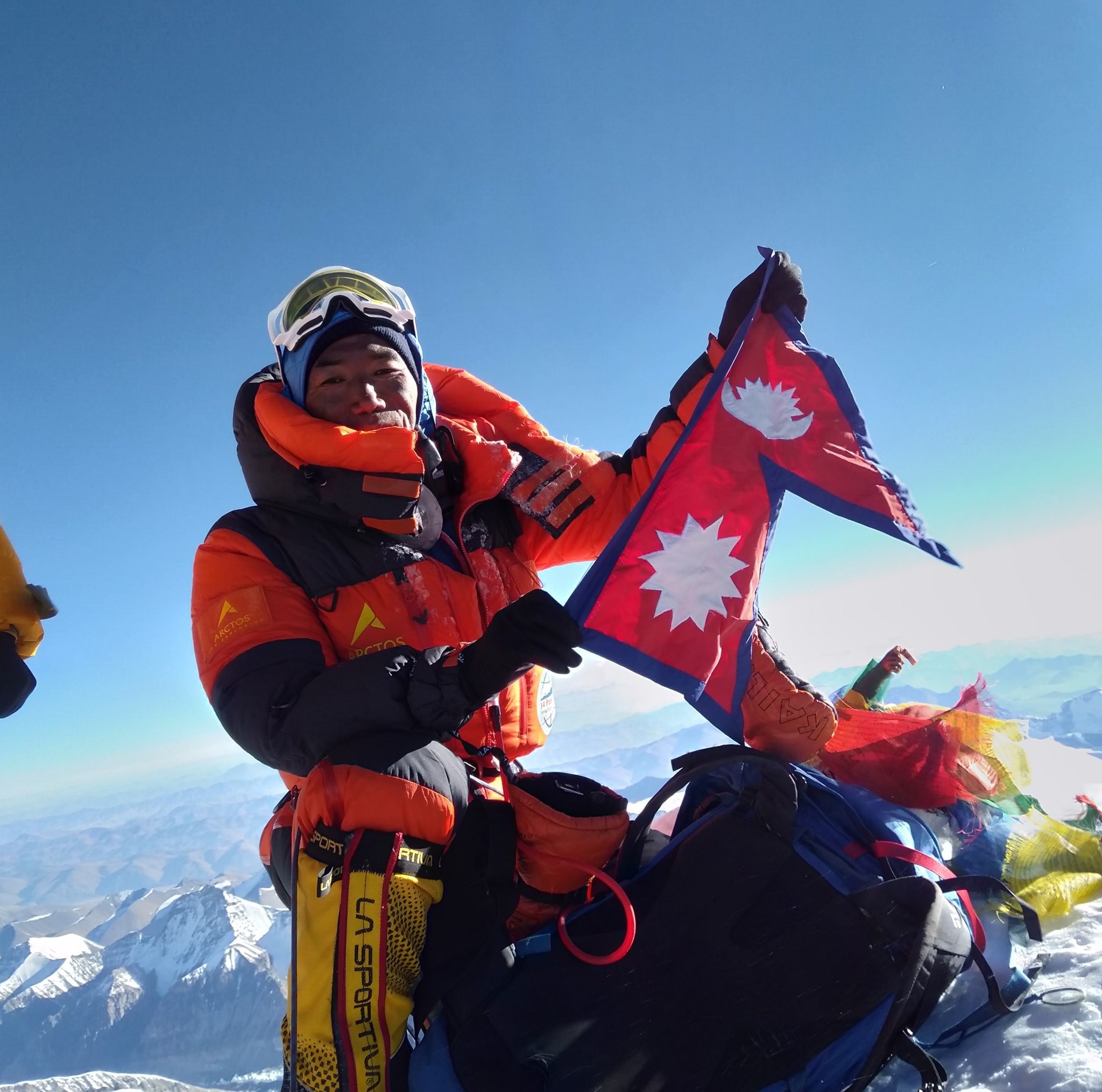
Mount Everest recorded the largest single-day number of summits from the Nepal side in its history on Wednesday, with 270 climbers and guides reaching the top of the world’s highest mountain during an intense 11-hour summit push, officials said.
"From 3 a.m. in the morning to 2 p.m. in the day the summit went on for 11 hours. It is historic from Nepal side," Khimlal Gautam, chief of the Department of Tourism’s Everest field office, told Everest Chronicle.
The previous single-day record from the Nepal side was set on May 22, 2019, when 223 climbers reached the summit on the same day Nepal announced the newly measured height of Everest, Gautam said.
"That record has been broken," he said.
However, Gautam noted that on May 23, 2019, a total of 354 climbers summited Everest from both the Nepal and China sides combined, which remains the overall single-day record for the mountain.
The latest wave of ascents pushed the total number of successful summits this season to more than 500, according to preliminary figures from the Department of Tourism and expedition operators.
The record-breaking day came amid severe congestion on the mountain, with hundreds of climbers attempting to capitalize on a brief period of favorable weather after weeks of delays earlier in the season.
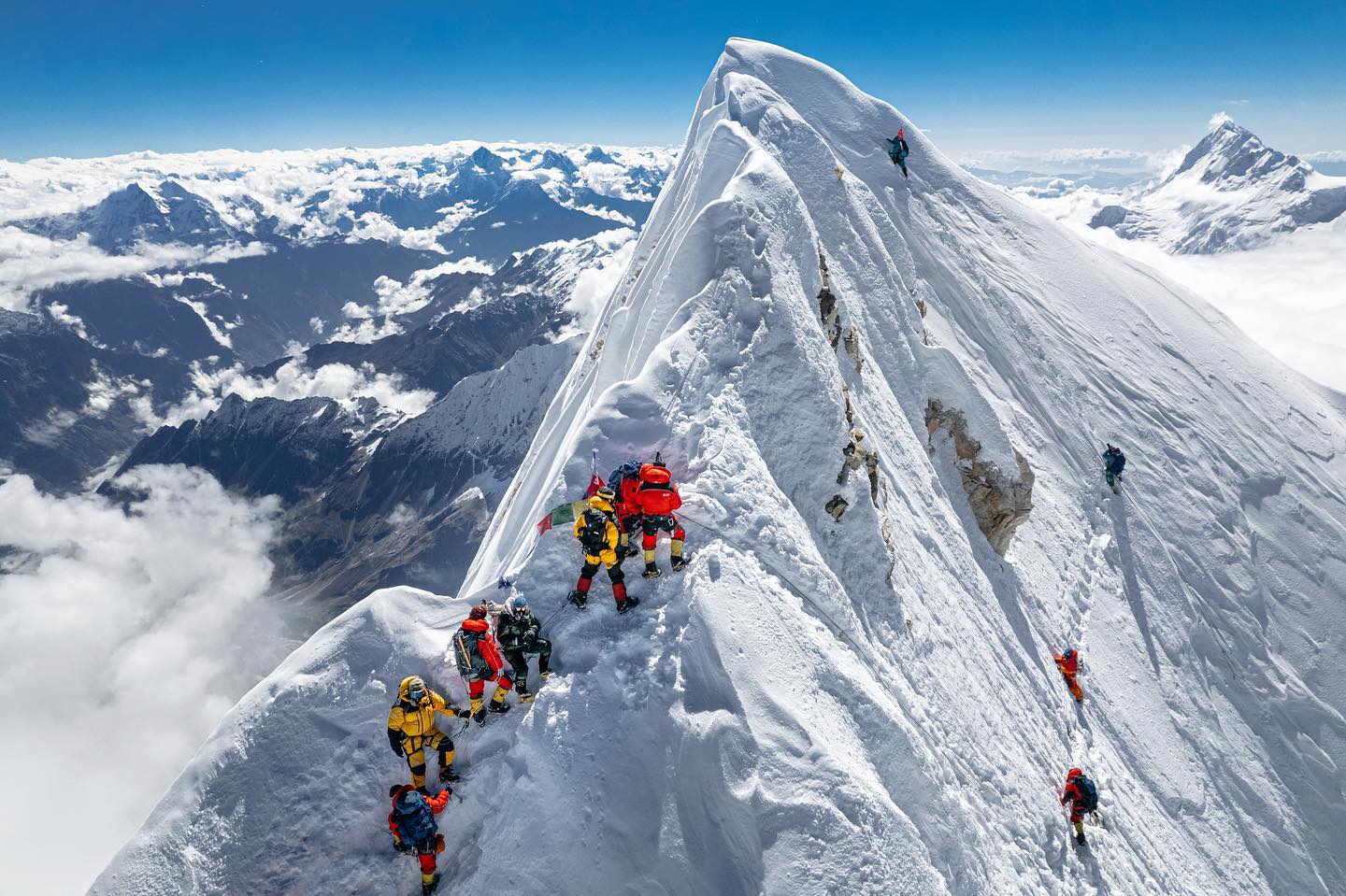
Long queues formed on the upper slopes from the Balcony area to the summit ridge as climbers waited in freezing temperatures in the thin air above 8,000 meters (26,247 feet), known as the “death zone.”
Expedition operators and officials expressed concern over overcrowding on the exposed section above the former Hillary Step, where climbers are vulnerable to rockfall and cornice collapse.
This year’s climbing season was delayed by several weeks after a massive serac blocked the only viable route through the Khumbu Icefall to Everest and neighboring peaks until it partially collapsed. Additional delays caused by unstable weather slowed the fixing of ropes to the summit route — the fixed safety lines climbers clip into during ascent and descent.
The delays compressed summit attempts into a narrow weather window, forcing large numbers of climbers onto the mountain at the same time.
Nepal issued a record 494 permits to fee-paying Everest climbers this season, including 389 men and 105 women from 55 countries, generating more than $7.2 million in royalties.
Despite the heavy traffic, officials said the season’s death toll remains relatively low so far, with three deaths reported, including one above the Khumbu Icefall.