Dhaulagiri expedition abandoned as climbing conditions worsen
Nepali climbers call off final attempt on world’s seventh-highest peak after heavy snow, strong winds and falling temperatures make ascent too dangerous

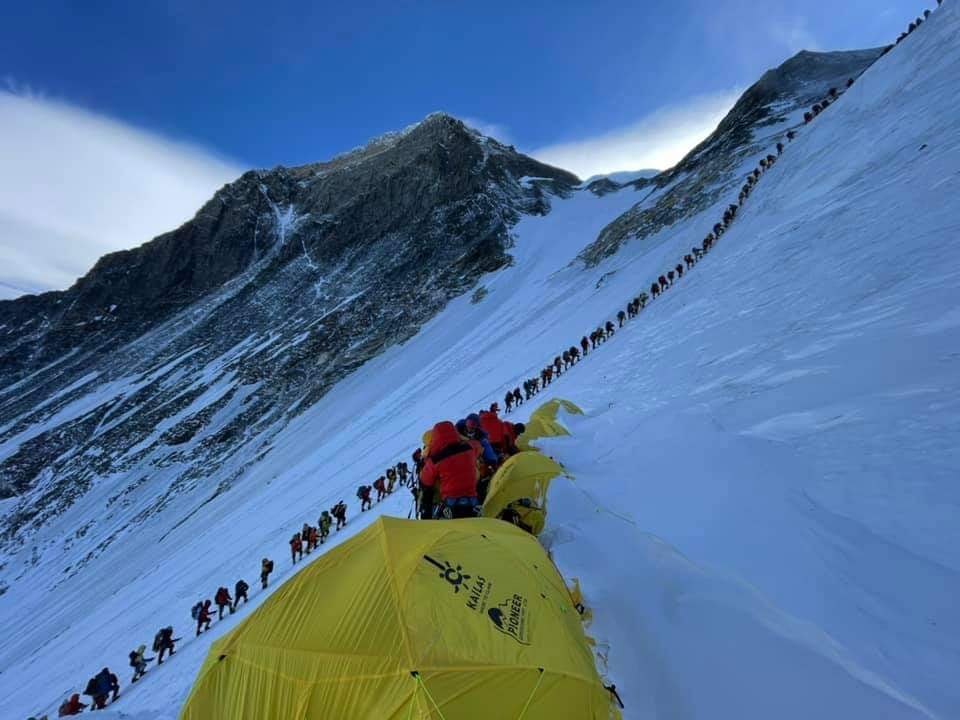
PC: Makalu Lakpa
A team of Nepali climbers has abandoned its final attempt to climb Dhaulagiri after heavy snow, strong winds and falling temperatures prevented them from advancing beyond Camp III, the team leader said on Monday.
The rope-fixing team turned back after a second attempt to push higher was thwarted by deteriorating conditions, bringing Nepal’s autumn climbing season on the world’s seventh-highest mountain to an end.
While most expeditions had already been called off following heavy snowfall in late September, a team of experienced Nepali climbers returned to the mountain for one last attempt. The decision to press ahead was considered exceptionally risky by professional mountaineers.
“The snow conditions were extremely adverse and temperatures were dropping rapidly, putting climbers’ lives at risk,” said Lakpa Sherpa, widely known as Makalu Lakpa, who led the rope-fixing team.
Dhaulagiri, at 8,167 metres, is one of the world’s 14 peaks above 8,000 metres. The mountain received up to three metres of snow in late September, leaving camps and climbing routes buried.
Expeditions on neighbouring Manaslu, another peak above 8,000 metres, had been called off even before the forecast snowfall. Seven Summit Treks was the first company to abandon its expedition as a storm approached, driven by a weather system developing over the Bay of Bengal. Other teams withdrew after seeing the deep snow that had buried base camp.
The Dhaulagiri team also returned to Kathmandu but later went back to the mountain for a final attempt.
“We started off well, but it began snowing on October 7 and 8, which made the situation worse,” Makalu Lakpa told Everest Chronicle. “I have never seen such adverse conditions in my entire climbing career. I concluded that it was not worth risking our lives.”
Makalu Lakpa has climbed 8,000-metre peaks 24 times, mostly while opening routes and fixing ropes for other climbers.
Snow, wind and falling temperatures were the main reasons for abandoning the attempt, he said. Climbers would have had to travel at night to take advantage of the limited weather window, increasing the risk of frostbite.
“The wind is more dangerous than the snow,” he said.
Makalu Lakpa climbed to around 6,700 metres to assess the snow conditions himself.
“If anyone doubts the decision to abandon the expedition, they can check the weather conditions themselves,” he said.
The team also faced a narrow window of favourable weather. Forecast conditions offered only two days, October 11 and 12, for a summit attempt, he said.
“On an 8,000-metre peak, we need at least five days of favourable weather to climb safely,” he said.
The team had already accepted considerable risks by attempting the mountain so late in the season, but pushing higher in the prevailing conditions would have been reckless, he added.
“Beyond that, it would have been foolhardy,” he said.
The attempt had raised concerns among Nepali mountaineers because of the heavy snowfall, worsening weather and risks of climbing Dhaulagiri so late in the autumn season.
Those concerns were heightened by a deadly avalanche at the base camp of Himlung Himal in late September, which killed 15 people, including two climbing guides and 13 kitchen staff, while one person remained missing.