Insurance firm blamed for Australian climber’s death on Himlung Himal
Expedition leaders blame a U.S.-based insurance firm, Global Rescue, for refusing a timely evacuation, reigniting debate over the reliability of high-altitude emergency coverage in Nepal.

PC: Abiral Rai
An Australian climber has died on Himlung Himal after what expedition organizers described as a preventable delay in rescue operations, reigniting debate over the reliability of international insurance companies handling high-altitude emergencies in Nepal.
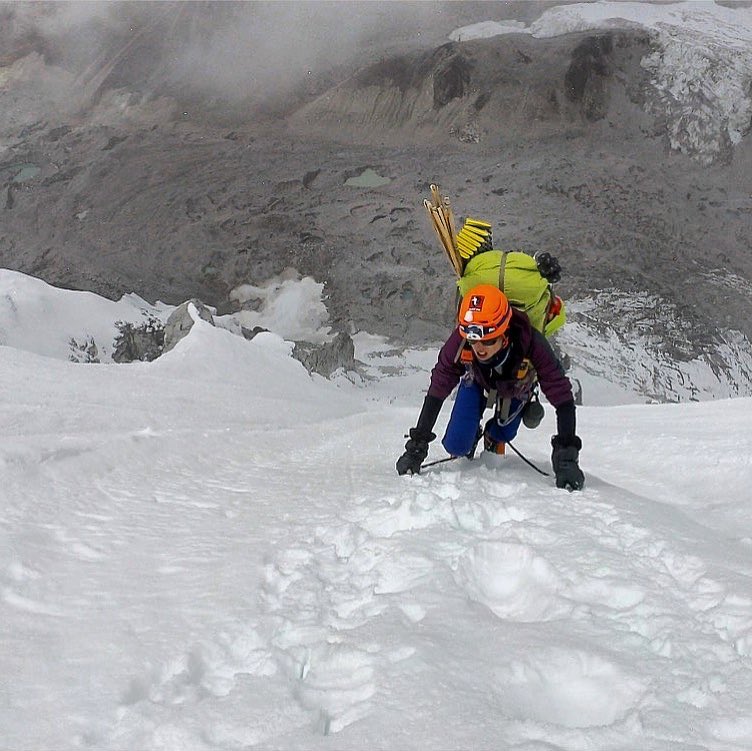
The climber, Chin-Tark Chan, 49, fell seriously ill on October 27 while descending from the summit of Himlung Himal (7,126 meters), situated in Manang district near the border with Tibet, in western Nepal. According to Pemba Sherpa, executive director of 8K Expeditions, Chan developed severe altitude-related complications around 6,700 meters and was barely conscious or able to walk.
“This is the incident of October 27 at around 11 am,” Lakpa told Everest Chronicle. “Our rescue helicopter was busy in the Everest region at that time, so we sent two Sherpa guides who managed to bring him down to Camp III, at about 6,200 meters, that night. There was heavy snow, which delayed the rescue work.”
Chan remained at Camp III on October 28 and 29, awaiting evacuation. Sherpa said the company sought immediate approval for a long line helicopter rescue on October 27 itself when he heard about the climber’s condition, but their insurance provider, Global Rescue LLC, declined to authorize the mission.
“I asked Global Rescue for permission for a long line rescue. It was totally possible to rescue him that day,” Sherpa said. “We have done similar rescues from Everest at around 7,000 meters in the past.”
Sherpa said the climber’s condition deteriorated rapidly as Sherpa guides attempted to bring him further down the mountain on October 29. Chan reportedly died below Camp III that afternoon. His body remains at around 6,100 meters, and a Sherpa recovery team has been mobilized to retrieve it.
Everest Chronicle could not reach Global Rescue for comment, but the company told Sky News Australia that a long line or hover rescue was requested and was deemed “unsafe” because the location exceeded Nepal’s maximum operating altitude for such missions. The company also cited poor weather, visibility, and aviation restrictions as factors that delayed the rescue.
In response, Pemba Sherpa rejected the company’s explanation. “They didn’t want to pay; they said it exceeded Nepal’s maximum operating altitude, which is nonsense. Such missions are frequent,” he said. “They have clearly said it, and I have texts from them to prove it. I can share them with the family or the Australian embassy if needed.”
Chan was an experienced mountaineer who had previously attempted Himlung Himal and often spoke of his affection for the mountain, according to Sherpa.
In the wake of Chan’s death, Mingma Sherpa, chairman of Seven Summit Treks, Nepal’s largest expedition agency for 8,000-meter peaks, has also accused Global Rescue of repeatedly refusing evacuation requests in previous seasons.
“Their service is third class, to say the least,” Mingma told Everest Chronicle. “At least fifteen climbers have died due to their negligence. They keep saying they are not a rescue company. If that’s the case, why sell policies to climbers? Why play with people’s lives?”
In recent years, the rescue insurance system in Nepal’s mountaineering industry has faced scrutiny following reports of fraudulent or unnecessary rescue claims. Some trekking and expedition operators have allegedly pushed for evacuations even when climbers did not require one, seeking to claim insurance payouts that can amount to thousands of dollars per flight.
These incidents, especially prevalent in commercial trekking routes a few years ago, prompted insurers to adopt stricter verification processes. As a result, insurance companies now often require direct communication with the climber or their family and detailed medical assessments before authorizing any high-altitude rescue.
However, expedition operators argue that this cautious approach has led to dangerous delays during genuine emergencies, where timely helicopter evacuations can make the difference between life and death.
This story has been updated to include context about fraudulent rescue missions in Nepal’s high mountains.