Australian claims record for fastest sea-level journey to Everest
Oliver Foran cycled more than 1,150 kilometres from India before climbing Mount Everest in 50 days, completing what he says is the quickest human-powered ascent from sea level to the world’s highest peak.
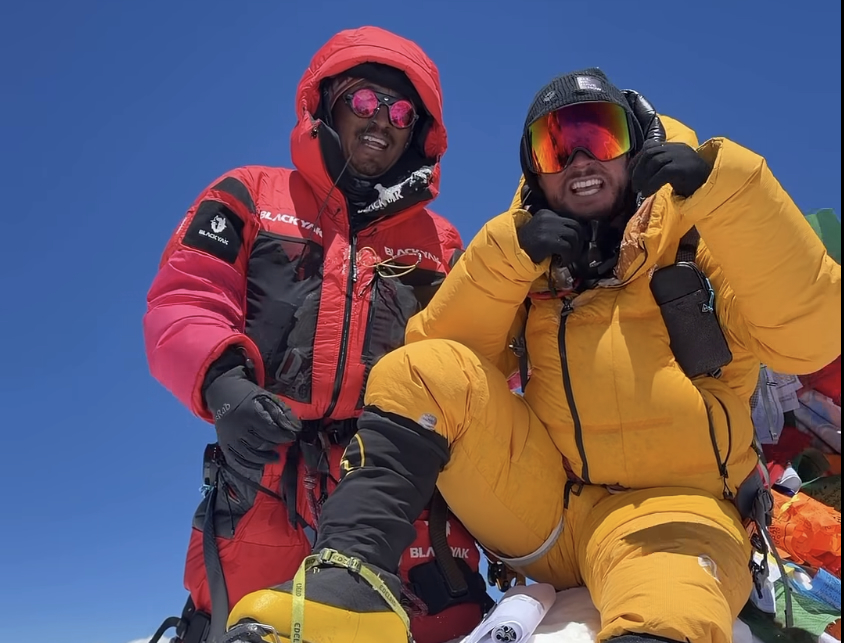
Australian climber Oliver Foran says he has set a new world record for the fastest human-powered journey from sea level to the summit of Mount Everest, completing the feat in 50 days.
Foran announced the achievement in a video recorded on the 8,849-metre summit on May 20 alongside Nepali climbers Gelje Sherpa and Ongchhu Sherpa. The expedition, titled Climbing for Young Minds, began 50 days earlier at sea level in India, from where Foran cycled more than 1,150 kilometres across India and Nepal before beginning his ascent of Everest.
The Australian described an ordeal marked by illness, avalanches and the exhaustion of high-altitude travel. “For so long, Everest barely even felt real because of everything that had to happen before we could even get there,” he wrote on Instagram, adding that the team had “rewritten what’s possible”.
The expedition was also intended as a fundraiser and awareness campaign for youth mental-health initiatives in Australia, including a planned partnership with the charity YouTurn Support to help establish one of the country’s first mental-health gyms for young people.
Gelje Sherpa, one of Nepal’s best-known high-altitude climbers and rescuers, played a central role in the project. The ascent marked his second “sea-to-summit” expedition in as many years. In 2025 he guided British adventurer Mitch Hutchcraft from England to Everest in a 240-day endurance challenge that combined swimming, cycling, running and mountaineering.
Hutchcraft, a former Royal Marine from Cambridgeshire, began that journey with a 34-kilometre swim across the English Channel before cycling roughly 12,000 kilometres through Europe and Asia to India. He then ran nearly 900 kilometres to Kathmandu before trekking to Everest Base Camp and climbing the mountain.
Gelje Sherpa has become one of the most recognisable figures in Himalayan mountaineering. A member of the historic 2021 winter ascent of K2, he later completed all 14 of the world’s mountains above 8,000 metres and co-founded Aga Adventures with British climber Adriana Brownlee, the youngest woman to climb all 14 eight-thousanders.
He is also regarded as one of the Himalaya’s leading rescuers, credited with more than 40 high-altitude rescues, including record-setting solo and long-line evacuations. He also led efforts to establish a climbing route to Cho Oyu from the Nepal side.
Another expedition linking Everest with environmental advocacy is currently under way. The “Summit to Sea” project traces the journey of Himalayan water systems from Everest to the Bay of Bengal, combining mountaineering, kayaking and climate storytelling.
Mountain guide Ang Tshering Lama and outdoor instructor Nishan Thapa summited Everest on May 20 as part of the initiative. Thapa said the team adhered to “Leave No Trace” principles by removing waste, oxygen cylinders and expedition equipment from the mountain.
He is now preparing to kayak down the Dudh Koshi river system towards the Bay of Bengal, highlighting the relationship between Himalayan glaciers, rivers and downstream communities increasingly threatened by climate change.
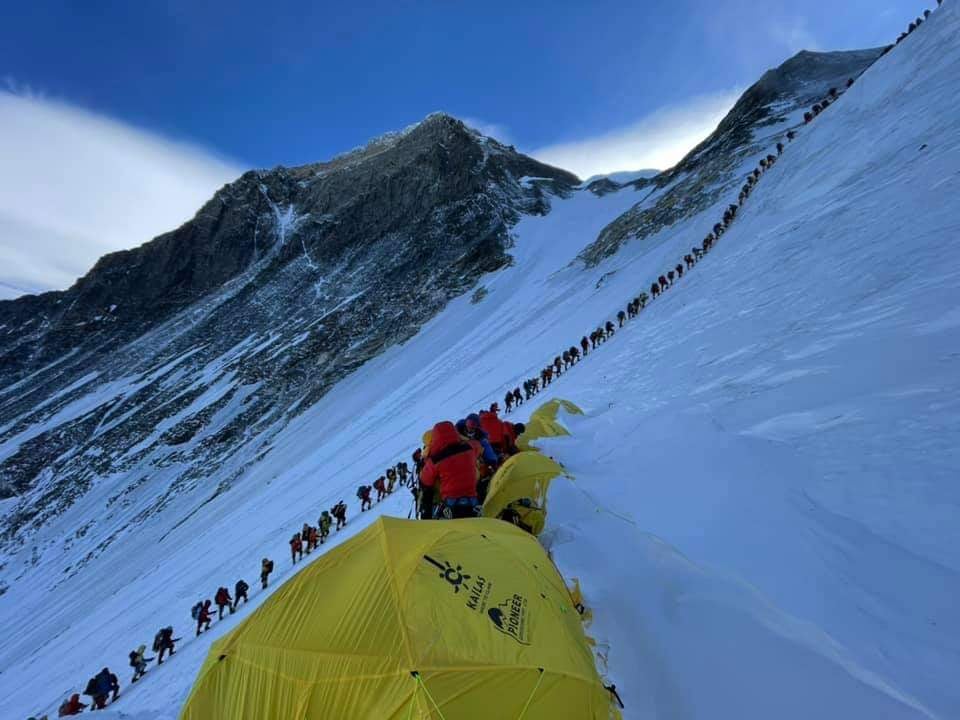
The twin expeditions come during Nepal’s crowded spring climbing season, with hundreds of mountaineers attempting Everest and neighbouring peaks during brief windows of favourable weather.