After a career of triumphs, Mingma G contemplates the final descent
Acclaimed mountaineer signals a possible retreat from high-altitude climbing after leading a perilous operation to recover fallen companions, including Nimsdai.

Mingma Gyaljen Sherpa, the renowned Nepali mountaineer known as Mingma G, kept largely away from the media after the Broad Peak avalanche that killed ten climbers.
He had led a rescue mission that many regarded as almost impossible, after losing some of his closest friends and colleagues while narrowly surviving an avalanche himself. When a helicopter finally transported the recovered bodies from Broad Peak base camp, Mingma G and his team were left to make their way on foot to Skardu.
After reaching Islamabad, Mingma G remained there for weeks as members of the rescue team brought the bodies home. Among the dead were Kili Pemba Sherpa, known as Kilu, one of his closest companions, and Nirmal Purja, known as Nimsdai. At his family's request, Nimsdai's body was flown to Britain rather than returned to Nepal.
When Mingma G eventually appeared in a BBC News documentary, he looked exhausted. In an unusually introspective interview, he appeared to be contemplating the end of his climbing career.
“I don't think I will climb that long, maybe finish those I have promised, maybe a year more,” he said.
His attachment to Kilu and Nimsdai, with whom he shared some of his greatest achievements, was clearly weighing on him.
“I was there with Kilu, I was with Nims. So I will always have their memories with me, whichever mountain I climb,” he said. “I am not sure if their memories help keep me climbing or make me stop.”
The documentary offered a rare account of Mingma G leading the recovery effort on the steep slopes of Broad Peak, where Pakistan lacked the long-line helicopter capability available in Nepal.
Throughout his career, Mingma G has spoken publicly about climbing practices and the responsibilities of expedition operators. Last year, he announced that he would stop organising expeditions on Annapurna because of the avalanche risk.
“Today I made my final goodbye to this beautiful mountain,” he wrote on social media. “This mountain is just too risky.”
He later told Everest Chronicle in Kathmandu that one section was particularly dangerous, with “no alternative route around it”.
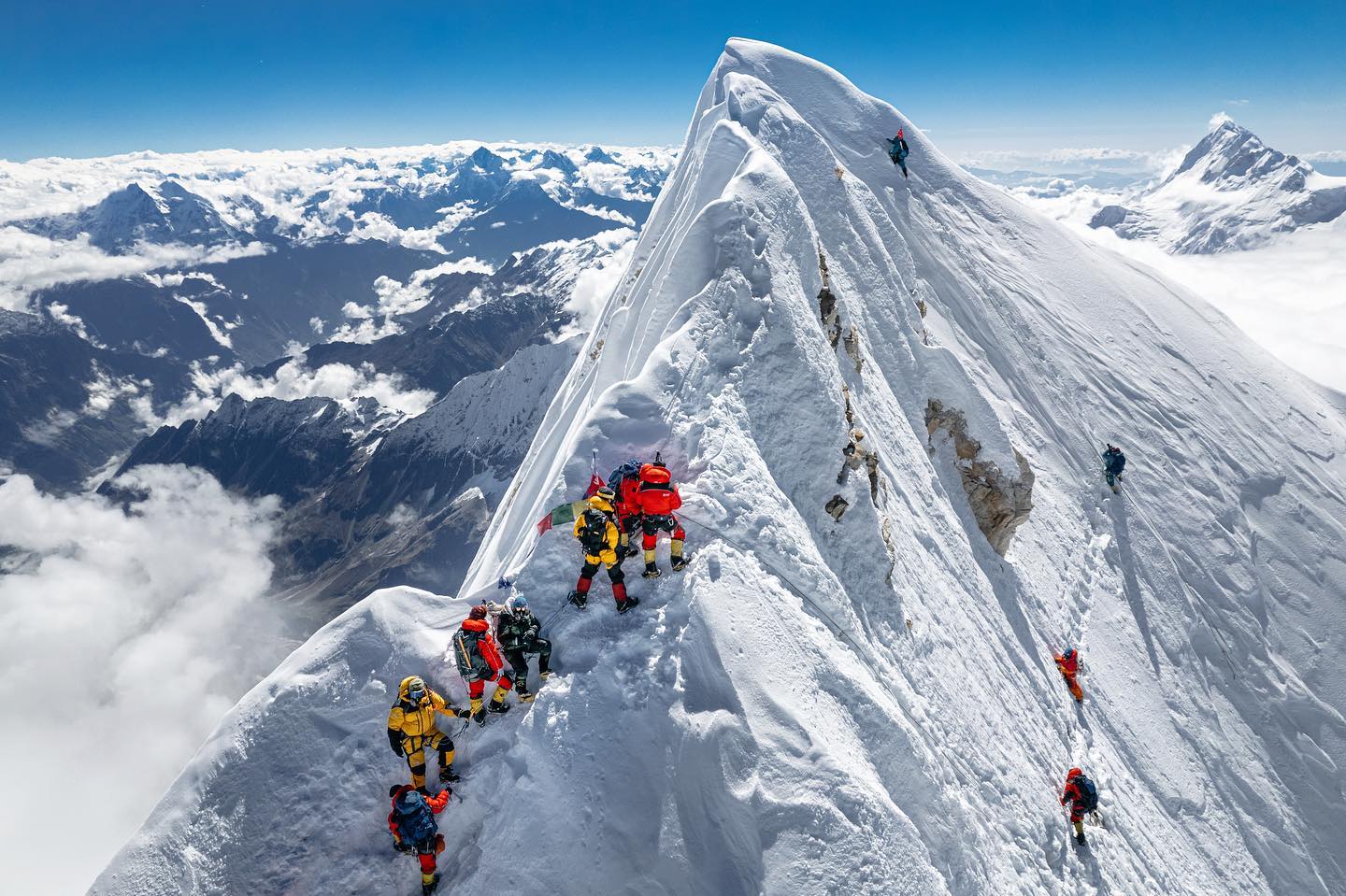
His concerns have also extended to the pursuit of mountaineering records. Mingma G identified the true summit of Manaslu, showing that the point long accepted as the mountain’s summit was not the highest point and prompting questions about several existing 14-peak records.
This spring, he appealed for recognition for six climbers whose independent push through the Khumbu Icefall on April 26 helped make the 2026 Everest season possible. Mingma G and climbers from his company, Imagine Nepal, working alongside members of Nimsdai's Elite Exped, had explored a route through unstable seracs.
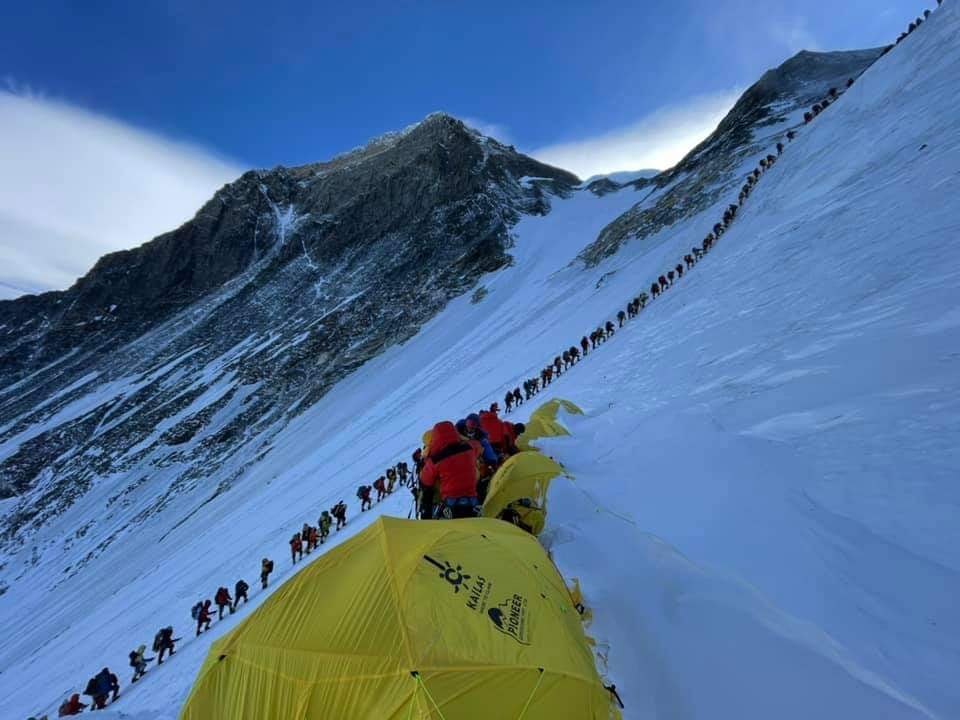
A record 1,100 people eventually reached the summit of Everest this spring. The government and the Expedition Operators Association, however, did not recognise the six climbers, giving official recognition only to designated “Icefall Doctors” and other guides.
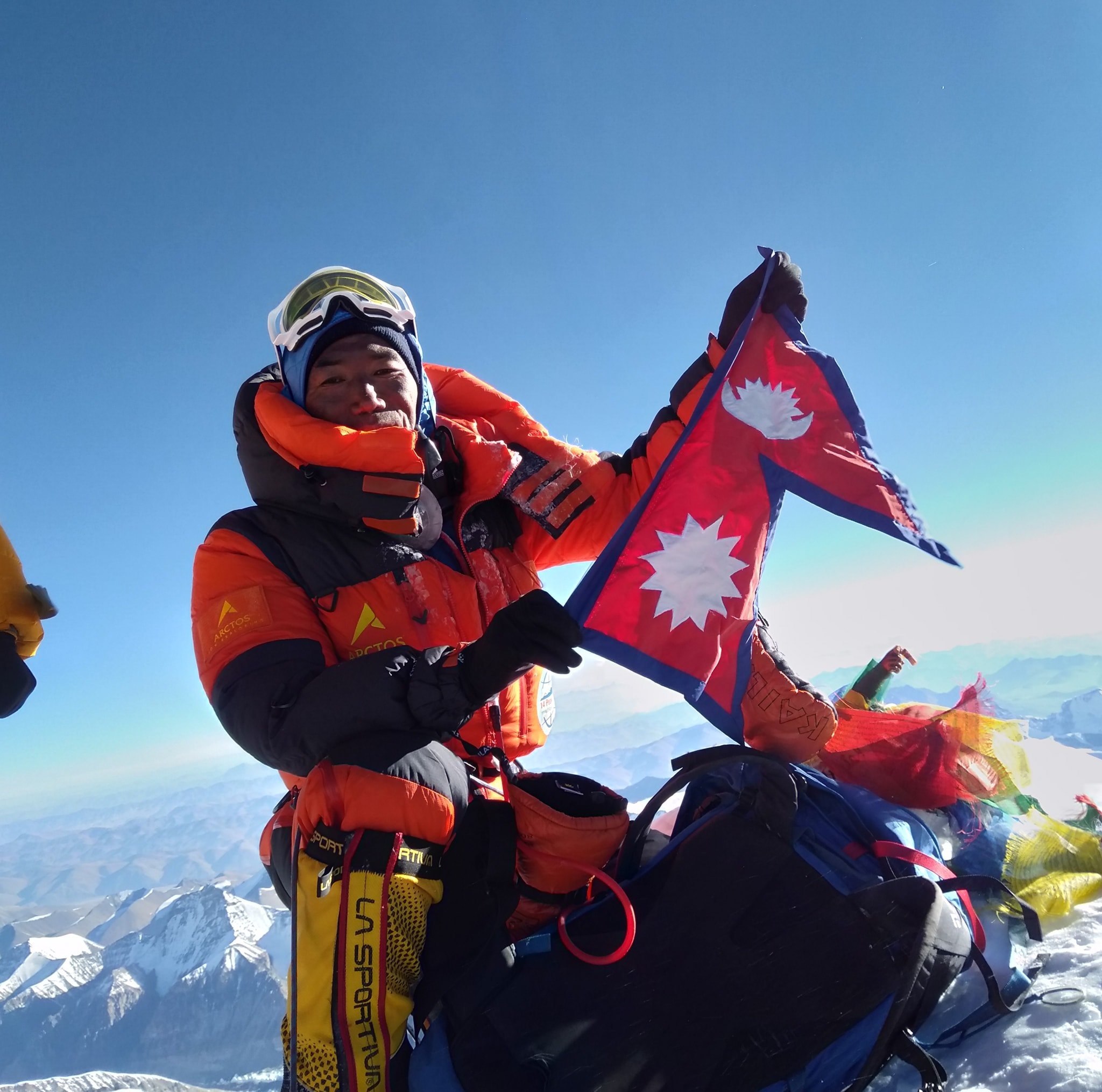
After summiting Everest on May 22, Mingma G announced that it would be his final ascent of the world's highest mountain. Imagine Nepal, his company, will continue to organise expeditions.
Speed Dawa Sherpa, who guided the Polish ski mountaineer Andrzej Bargiel on Everest, told Everest Chronicle that Mingma G was unusual among expedition operators because he continued to work alongside high-altitude workers.
“Can you imagine any other executive working and climbing alongside other climbers?” he said.
Mingma G's career began with a solo ascent of Chobutse. His most celebrated expedition came in the winter of 2021, when he was among ten Nepali climbers who made the first winter ascent of K2. Kilu was among the ten Nepali climbers who made the historic first winter ascent of the Savage Mountain.
All ten climbers walked together to the summit, singing Nepal’s national anthem as they stood on the top of the world’s second-highest mountain — a moment that turned a historic ascent into a spectacle of national pride.
It was during that expedition, he told the BBC, that he developed a close bond with Nimsdai.
In 2024, Mingma G became the first Nepali climber to complete all 14 eight-thousanders without supplemental oxygen, accomplishing the feat alongside Nimsdai.
This summer, Nimsdai was heading towards Broad Peak while Mingma G was on K2, about eight kilometres away. Conditions, Mingma G told the BBC, were initially ideal. He was leading the rope-fixing team on K2 and radioed Kilu on Broad Peak, saying they would speak again from Camp III.
He never heard from him again.
The silence led him to suspect an avalanche. Mingma G cancelled his K2 expedition and returned to base camp. The team waited a day before setting out towards Broad Peak on foot.
A drone flown over the mountain the following morning located the site. Mingma G told Everest Chronicle that there were no survivors. Everest Chronicle obtained photographs of the scene but reported the deaths only after Elite Exped confirmed Nimsdai's death.
The recovery from the steep, largely snowless slopes became one of the most difficult operations of Mingma G's career. During the first attempt, rescuers narrowly escaped a major avalanche that carried the bodies farther down the mountain.
Speed Dawa withdrew on the first day. “It was impossible to pull down those bodies from the cliff,” he told Everest Chronicle.
Climbers from Imagine Nepal and Elite Exped persevered. “We climbed the snowless cliff to reach the bodies,” recalled Pema Chhewang Sherpa.
As the bodies were being lowered, one fell into a flooded crevasse. Pema climbed in to retrieve it.
“If it was not me, nobody would ever dare jump into the death pool,” he said, later acknowledging that the decision was reckless.
The experience convinced Pema that he would not return to Pakistani peaks, he said, because of the lack of effective high-altitude rescue systems.
Mingma G told the BBC that Kilu's wife had asked him to bring her husband home. His team ultimately recovered the bodies of Nimsdai, Kilu, Nima Sherpa, Gyalu Sherpa and the Chinese climber Wang Zhong.
The bodies of the Nepali climber Pur Bahadur Gurung and the Omani climber Nadhira Al Harthy, along with the remains of the American climber Sarah Mallory Geis, had already been found. The body of the Pakistani climber Sohail Sakhi was recovered later. The remains of the Nepali climber Nawang Thendu Sherpa remain on the mountain.