‘Hillary’ Dawa survives two-and-a-half days trapped in Khumbu Icefall crevasse
Nepali guide survives on leftover biscuits and ice before crawling out as shifting snow fills escape route on Everest.
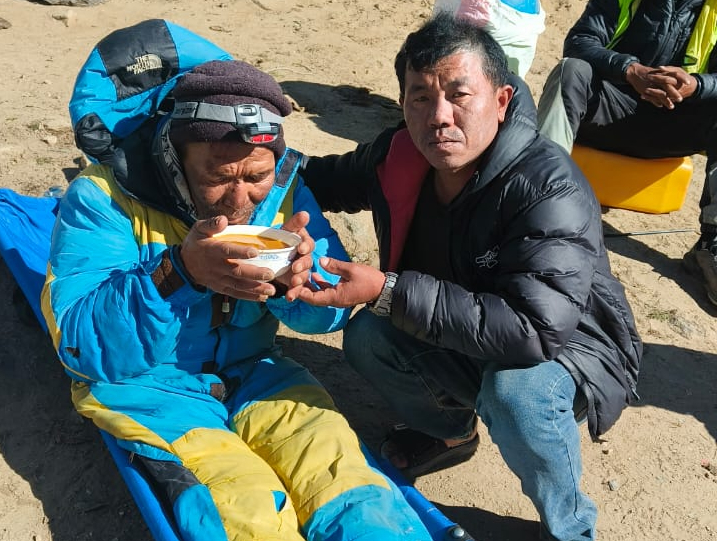
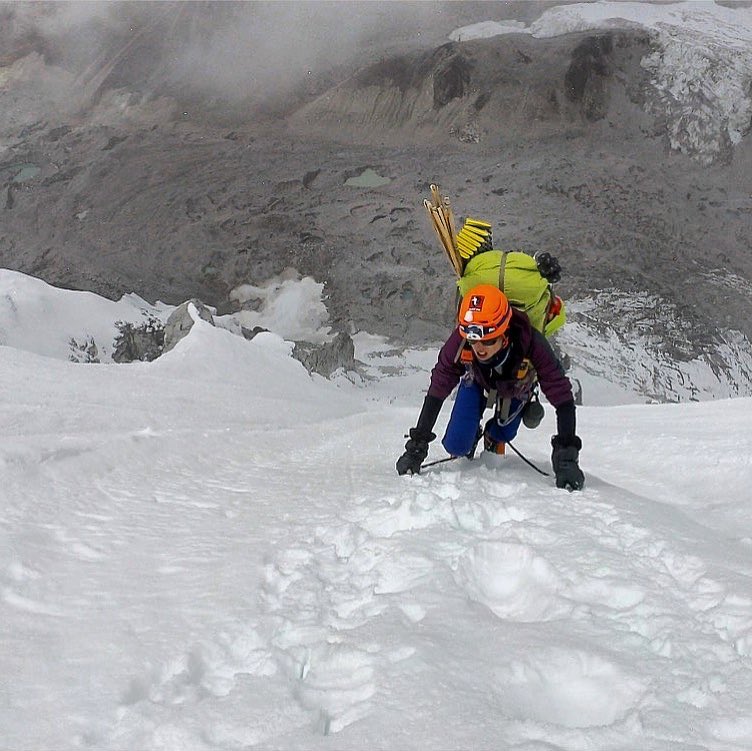
Dawa Sherpa, a Nepali high-altitude guide, has survived an extraordinary ordeal on Mount Everest after falling into a crevasse at around 5,500 metres just below Camp I and enduring days alone in sub-zero conditions with no immediate rescue operation.
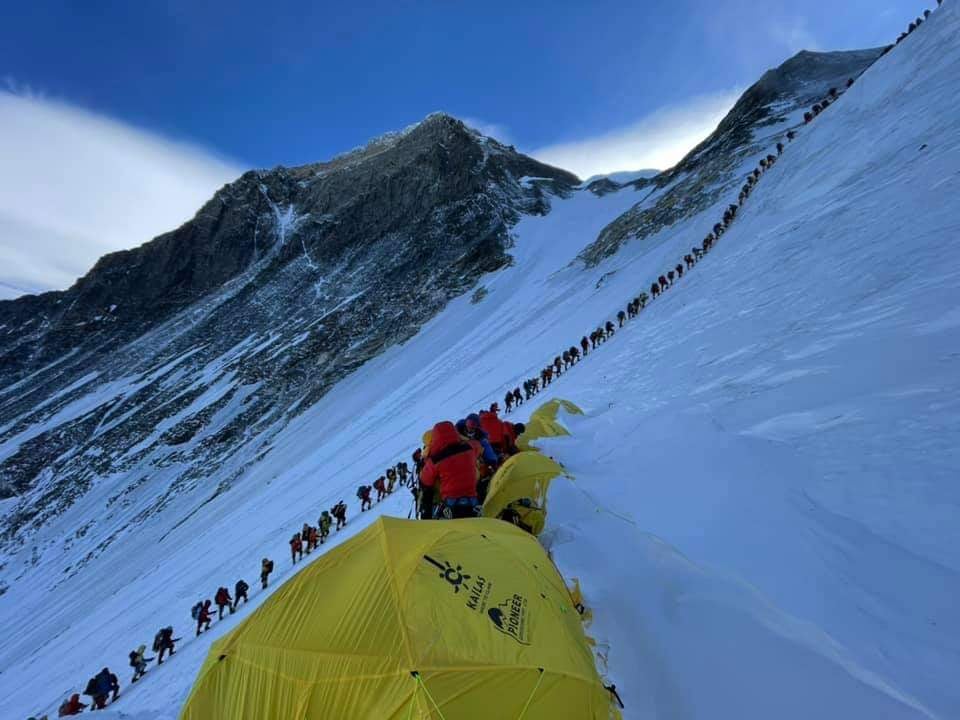
He had fallen behind as his team descended in late May, when most expedition staff were already returning to base camp ahead of the end of the climbing season on May 29. Oxygen supplies were running low and, according to expedition accounts, “everyone was in a hurry” to reach base camp before the route through the Khumbu Icefall closed for the season.
As multiple teams descended simultaneously, the Sagarmatha Pollution Control Committee (SPCC) had not yet begun dismantling ladders from May 29. Instead, it entrusted three expedition companies with clearing sections of the Icefall during their descent.
However, Dawa Sherpa’s company was not among those assigned the responsibility. As a result, climbers were moving quickly through the treacherous section to descend ahead of deteriorating conditions.
Separated from his clients and fellow guides, Dawa descended alone.
Late-May conditions, climbers say, can turn the Icefall into a labyrinth of melting snow bridges, unstable channels and hidden streams beneath the surface.
He then slipped into a deep crevasse below Camp I. With no one nearby to pull him out, he remained trapped for roughly two and a half days.
“He waited for help, living in a freezing cold chasm of ice,” said Mingmar Tendi Sherpa, who said he later heard Dawa narrate his ordeal in Surke village while waiting for a helicopter to Kathmandu.
Inside the crevasse, he survived on a small pocket of biscuits, eating them sparingly and melting ice for hydration.
He waited for rescue. None came.
At one point, a small avalanche began filling the void, gradually raising the snow level and allowing him to claw his way upward. Using the shifting snowpack, he eventually escaped the crevasse and began a slow descent toward base camp.
He was later found by an SPCC clean-up team on Thursday morning.
“He suffered frostbite to both legs and fingers on both hands, but he seems in good condition,” said Mingmar.
The 8K Expedition team, which had secured the climbing permit, launched a search operation five days after his disappearance. During the search, he is said to have heard a helicopter overhead and raised his hands, but was not spotted.
Mingmar said survival in such conditions is rare. “Not everyone can survive in a crevasse. It is extreme cold, limited oxygen, and a high risk of asphyxiation,” he said. “Survival depends not only on physical strength but mental resilience.”
Dawa Sherpa then reportedly made his way from near the Yellow Band to base camp over about a week, moving slowly without supplemental oxygen or proper supplies — a distance that would normally take a day.
“This could be the first documented self-rescue descent on Everest from a Khumbu Icefall crevasse,” said Pasang Dawa Sherpa, an elected representative from his rural municipality in Okhaldhunga district.
British climber Chris Thrall, a client of Himalayan Traverse, is reported to have encountered Dawa near Camp IV during descent operations around May 29. However, he did not descend with him.
“Chris told us he informed the company that he had fallen behind,” said Dawa’s daughter, Mendo Lhamu Sherpa, speaking to Everest Chronicle. “But no one came back to search for him. We demand accountability from the companies involved.”
Dawa Sherpa, also known as Kale Dawa and owner of Himalayan Traverse, reportedly asked the family to begin funeral rituals, while also initiating paperwork to claim insurance.
Ward chairperson Pasang Ngima Sherpa of Khujidemba Rural Municipality described the response as “irresponsible,” saying questions were raised over the adequacy of the search effort.
A search operation was only conducted after six days, following pressure from relatives.
As Dawa arrived at the hospital, a tense situation followed as family relatives clashed with the expedition operator. According to Chairperson Pasang Ngima Sherpa and family, both the operator owner and wife of Dawa were taken in custody to diffuse the situation.
Himalayan Traverse had not obtained its own Everest permit, instead sharing one with 8K Expeditions — a cost-cutting arrangement that splits royalties, liaison fees and base camp expenses, but often blurs responsibility when crises arise.
The Department of Tourism said it formally recognises 8K Expedition as the permit holder responsible for operations. Both companies, however, disputed responsibility for the search.
The search was eventually launched but failed to locate him.
In the end, Dawa Sherpa survived on his own — through endurance, chance and timing: days trapped in a narrowing ice void, a partial avalanche that became an unlikely escape ladder, and a slow descent through a mountain already being dismantled for the season’s end.
Dawa Sherpa is currently undergoing treatment at HAMS Hospital in Kathmandu. Doctors say his condition is stable, though he continues to receive care for frostbite injuries sustained during the ordeal.